Introducing Professor Giuseppe “Peppe” Saccomandi
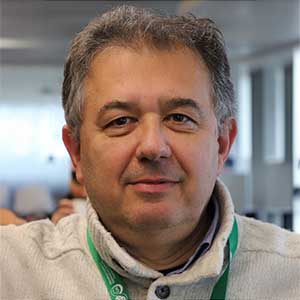
My academic ties to the United Kingdom are deep and multifaceted, yet until this summer—when I took up a Residential Fellowship from July 2 to 31—I had never once set foot on the campus of Loughborough University.
July at Loughborough carried a quiet, unhurried pulse—the kind of rhythm that invites long walks and lingering reflection. In that spacious stillness, I found myself able to truly appreciate the meticulous care and thoughtful design woven into every layer of the IAS experience. From the initial travel coordination to the final logistics of arrival, each step was managed with striking professionalism, tempered always by a genuine warmth that never felt formulaic.
The welcome card waiting in my apartment, the small tin of biscuits, the inviting comfort of the living space—these were not mere gestures of politeness. They were, in their own understated way, foundations: quiet signals that said not only you are welcome, but also you belong. And belonging, I came to realise, is not a frivolous luxury in academic life—it is the very precondition for intellectual freedom. In that carefully held environment, creative thought found room to stretch, uncluttered by distraction or friction.
Perhaps this is the deeper reason behind the IAS’s growing reputation—not merely as a site of interdisciplinary exchange, but as a place where collaboration is nurtured not through grand declarations, but through the quiet architecture of attention. It is a space where scholarship is taken seriously precisely because the scholar, first and foremost, is taken care of.
The fellowship also offered invaluable opportunities for research engagement—particularly in a field as intellectually demanding as applied mathematics, where clarity of framework is not a luxury but a necessity for meaningful progress. Presenting my work during a postgraduate researcher workshop, and later at a formal seminar, created fertile ground for genuine dialogue and constructive critique. What struck me most, however, was not merely the quality of the questions or the depth of the discussions, but the IAS’s steadfast commitment to ensuring that collaborators and mentors were not only invited but actively present—engaged, attentive, and invested in the intellectual exchange.
In the span of a single month, I found myself meeting repeatedly with colleagues and mentors from the Department of Mathematics, each conversation layering new insights onto old questions. These encounters, brief as they were in calendar time, have since taken on a life of their own: they have evolved into ongoing online meetings, regular touchpoints around a collaborative research project that now feels less like a post-fellowship afterthought and more like a genuine intellectual partnership taking root. It is a vivid reminder that academic networks are not forged in grand gestures, but in the quiet continuity of shared curiosity.
Looking ahead to the coming months, I am quietly confident that what was sown during this period will find its way into tangible fruit. The seeds of thought planted in those seminar rooms and corridor conversations are already beginning to germinate, and I have little doubt that they will crystallise into results of substance—findings that will eventually find their place in relevant and compelling scientific publications. The work, of course, remains to be done; but the foundation has been laid with care, and that, I have learned, is more than half the battle.
As is always the case, moments become truly memorable not because of places or facilities, but because of people. And in this, the fellowship exceeded every expectation. Everyone I encountered—staff, faculty, researchers, and fellow collaborators—demonstrated a genuine, unfailing commitment to my comfort, wellbeing, and productivity throughout the entire month. There was an unmistakable culture woven into the fabric of the IAS: a culture of care, of generosity, and of intellectual openness that never felt performative, but deeply authentic.
I would be remiss not to offer particular gratitude to Dr Karima Khusnutdinova, who offered me not only a warm and generous welcome, but also research directions of remarkable depth—questions that challenged me, intrigued me, and continue to occupy my thoughts long after my departure. Equally, I must thank Professor Evgeny Ferapontov, who was unfailingly hospitable and, more than that, profoundly insightful—his vast erudition and sharp intellectual acumen made every conversation a true pleasure and a genuine learning experience.
For me, this fellowship was never simply an academic residency. It was, above all, an exceptional opportunity to encounter exceptional people—to exchange new ideas, to forge new collaborations, and to discover new ways of seeing both my own work and the wider world. The IAS at Loughborough University is, in every sense, a formidable institution—one that truly makes a difference, not only in the careers of those it hosts, but in the quiet, enduring way it shapes how they think, connect, and create.
Professor Giuseppe “Peppe” Saccomandi

