Celebrating Tết Away from Home: Lunar New Year as a Vietnamese Student in London
Written by Chi Nguyen
What would you like others to know about Lunar New Year?
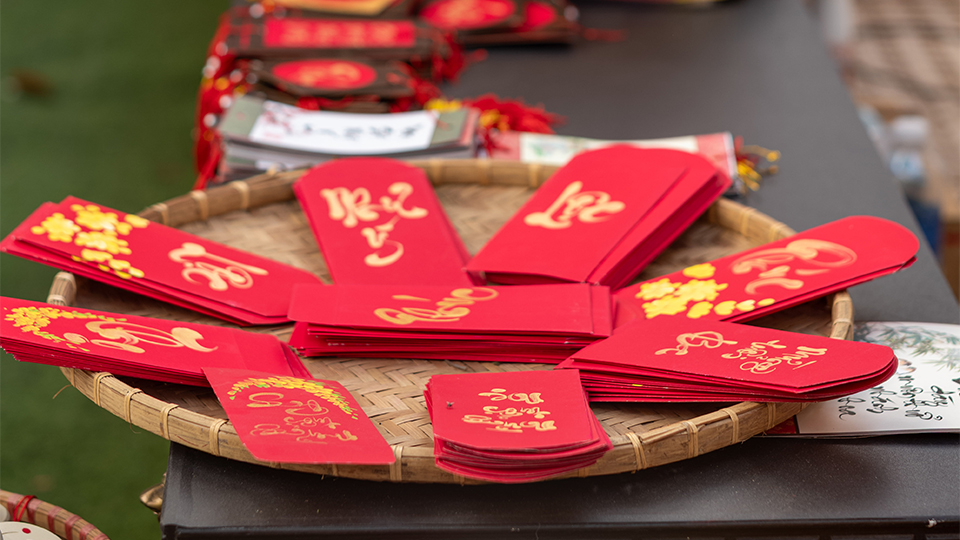
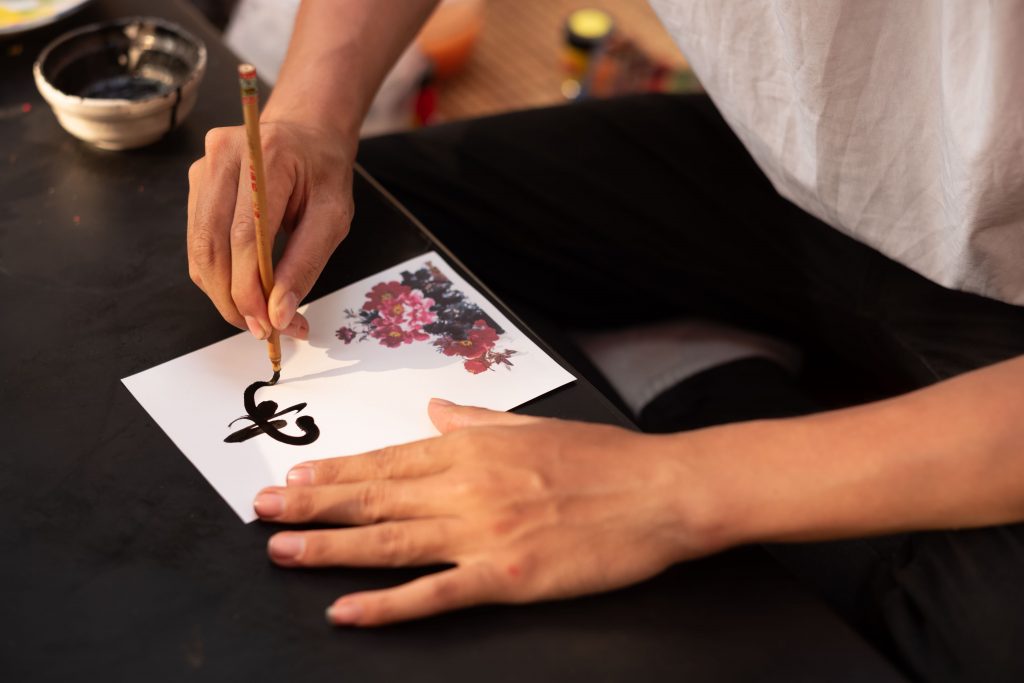
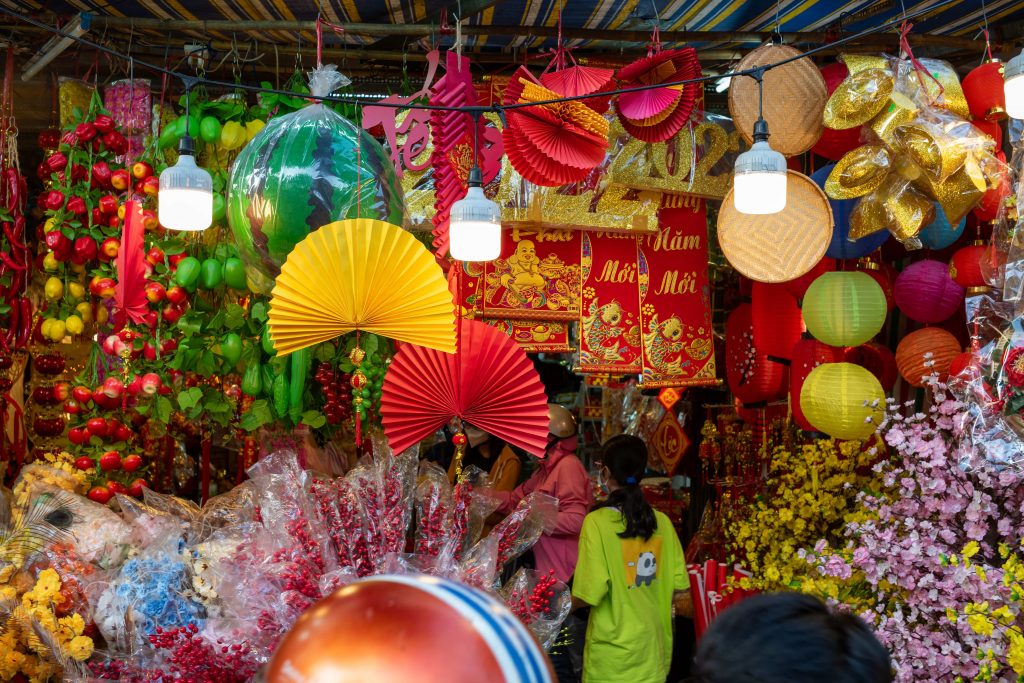
Lunar New Year is the most important festival across many parts of Asia, reflecting deep cultural, spiritual, and familial bonds. In Vietnam, we call it Tet. Following the Western New Year, Tet usually falls in January or February, with decorations appearing as early as a month beforehand. From cities to rural villages, streets come alive with high‑spirited crowds, traditional ornaments, and national flags adorning every corner. Regional differences shape the atmosphere: pink peach blossoms brighten the North, while yellow apricot blossoms flourish in the South, both symbolising prosperity and good fortune. Although folk paintings and red calligraphy scrolls are less visible in major cities today, they remain culturally significant as invitations for harmony, wisdom, and luck. Central to Tet is the practice of honouring parents and respecting teachers, reflected in the traditional order of the first three days: Father first, Mother second, and Teachers third. These values deeply anchor in each Vietnamese, even as the country celebrates with joy in the biggest festive season of the year.
Are there any special traditions during Tết and what do they symbolise?
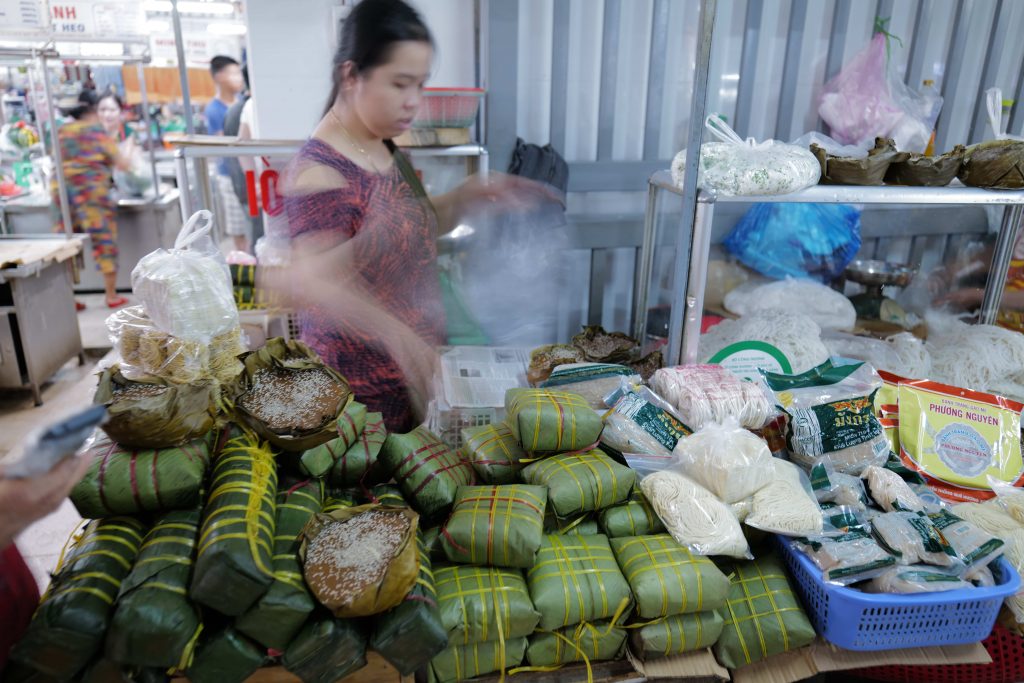
Tet holiday normally lasts five days, yet it remains the most anticipated season. The excitement perhaps comes from the abundance of traditional dishes and the joy of receiving lucky money in red envelopes. Each region has its own distinctive specialties, but children and adults alike love bánh chưng, the square sticky‑rice cake wrapped in dong leaves, and bánh tét, its cylindrical southern counterpart. Traditional pork sausage, spring rolls, red sticky rice, and candied fruits are also beloved Tet foods, cherished not only for their flavours but for their symbolism of prosperity, family unity, and a fresh start. Red envelopes, filled with lucky money, represent blessings passed from elders to younger generations, wishing them health, wisdom, and kindness for the year ahead. Tet therefore carries deep‑rooted cultural values that extend far beyond visible decorations and celebration. Wherever we are, Tet lives most strongly in our thoughts and reflections, shaped by a thousand years of ancestral values passed from generation to generation.
How will you be celebrating Tết as a university student away from home?
While I have always prioritised spending Tet with my family, this year will be my first Tet away from home. Although there are still two weeks until Lunar New Year, Loon Fung, the Far Eastern food market in Stratford, has already filled its aisles with festive items. The most striking are the kumquat trees, symbols of abundance and good luck. Decorations and foods from different Asian cultures are displayed right at the checkout, drawing in customers who will likely celebrate their traditional New Year here in London. For those seeking a celebration that feels almost like home, Chinatown is undoubtedly the heart of Lunar New Year festivities. Lion and dragon dances, street performances, and colourful food stalls create a completely different atmosphere from Western fireworks and champagne.
Beyond the festive energy, Lunar New Year is also a moment to slow down and reflect. I will spend the first day of Lunar 2026 at Linh Sơn Temple, a Vietnamese pagoda in Lewisham, Southeast London, to welcome the fresh energy of a new chapter. These practices help me cultivate focus, resilience, and compassion, qualities that support my journey as a sport leadership student and a dedicated marathoner.
In many Asian cultures, we believe that while the Western New Year, based on the solar calendar, brings a visibly festive and outward‑facing energy, the Lunar New Year offers a more personal, reflective balance. If Christmas and the Western New Year are celebrated with vibrant bustle, then taking a quiet moment to embrace the stillness and freshness of the Lunar New Year can become a meaningful way to reconnect with our inner peace, or simply a gentle pause to breathe.
All photos in this blog are credited to Dzung Viet Nguyen.


Loughborough University London
Blogging everything that’s happening at Loughborough University London