IDIA at APSA 2026: Britain in Europe, the Power of Sport, and a Visit to MIT
By Dr Tim Oliver, Director, IDIA
Staff and doctoral researchers from the Institute for Diplomacy and International Affairs (IDIA) at Loughborough University London travelled to Boston at the end of last month to present their work at the 2026 Annual Meeting of the American Political Science Association (APSA).
Founded in 1903, APSA is the leading professional association for political scientists, with members across the world. Its Annual Meeting is one of the largest gatherings in the discipline. This year’s meeting, the 122nd, ran from 3 to 6 September under the theme “Democracy Under Threat: How to Understand, Protect, and Rebuild”.
We attend APSA or other conference such as those held by ISA (the International Studies Association), the PSA (Britain’s Political Studies Association conference) or UACES (the University Association for Contemporary European Studies) because it allows us to present and test our research, build partnerships with colleagues in North America and beyond, and give our PhD researchers experience of presenting at one of the discipline’s major conferences.
Awkward Partner or Quiet European?
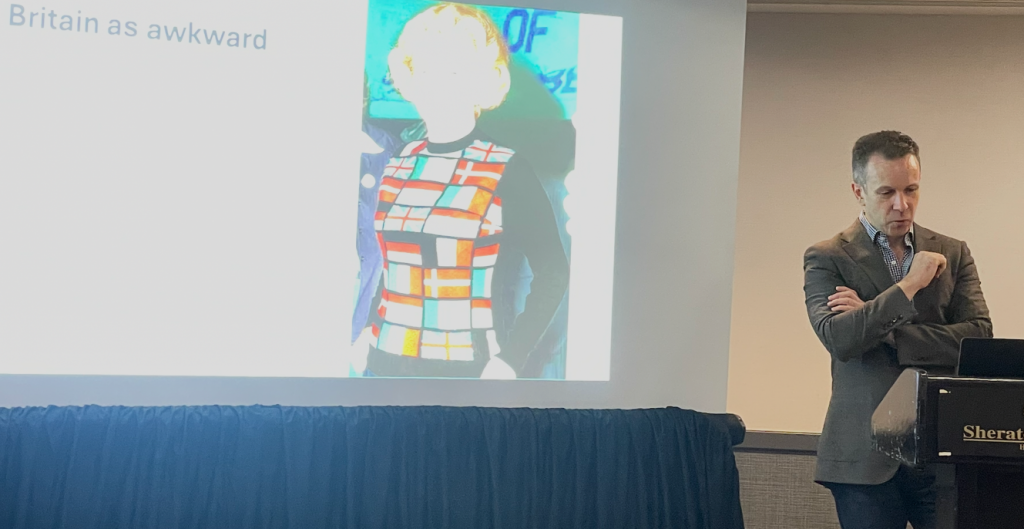
I presented a paper Awkward Partner or Quiet European? Reinterpreting the UK’s Role in the EU on a panel of the same name. For decades Britain’s relationship with European integration has been summed up as that of “an awkward partner”. The paper argues the label is not so much wrong as unbalanced. I define awkwardness through five traits that can be applied to any member state and also set out the idea of a “good European”. When Britain’s awkwardness is set alongside its (often overlooked) strong constructive record, from building the single market and championing enlargement to complying with EU law better than any founding members, the record does not look so awkward. Meanwhile, lots of other EU member states such as France, Denmark, Ireland, Germany and Greece have at times matched or exceeded Britain’s awkwardness without gaining its reputation. Britain, the paper concludes, was a quiet European whose contribution was least appreciated at home, and that one-sided story helped create the conditions for Brexit. What I try to explain is how and why the awkward label stuck to the UK and not to others.
From Stadiums to Power
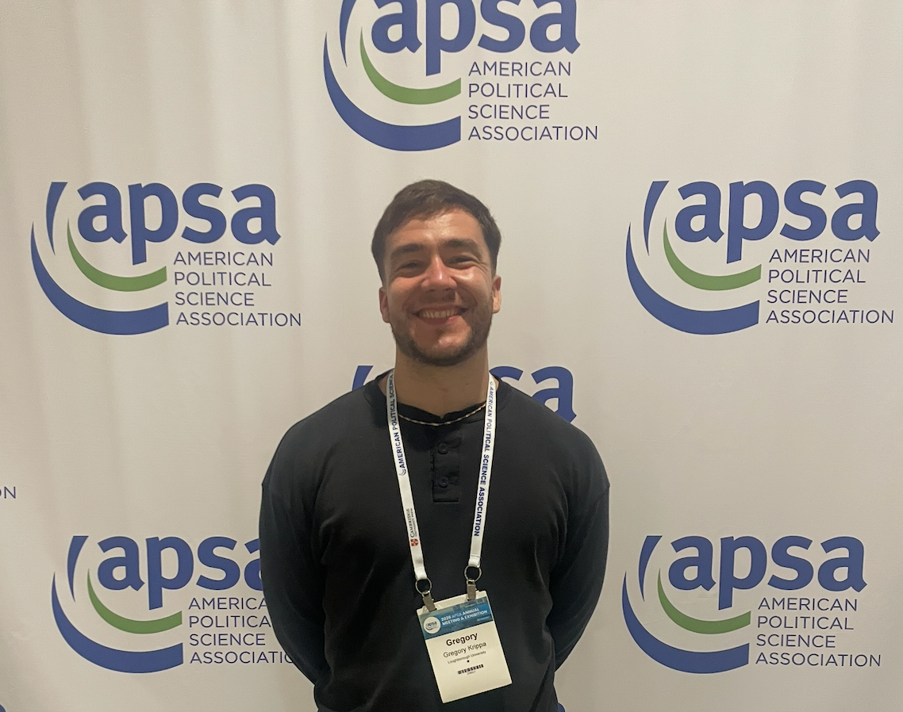
Gregory Krippa, a PhD researcher at IDIA, presented From Stadiums to Power: Measuring the Soft Power of Sports Mega Events on the panel What Is the Future of Political Power? Sports mega events are often treated as obvious instruments of soft power but measuring whether that power actually works is much harder. The paper argues that understanding soft power as co-optation, defined by Joseph Nye as making others want what you want, opens up new ways of studying the concept through methods such as cognitive mapping. Gregory applied cognitive mapping to the case of the 2022 FIFA World Cup in Qatar, examining whether Qatar successfully co-opted the hospitality industry and how this compared with its GCC rivals. The cognitive mapping data suggest that the World Cup increased awareness of Qatar as a destination and signalled a favourable investment environment, although it was unable to co-opt major hospitality companies. This was largely because the tournament did not change the causal beliefs through which the industry understood Qatar. It did not alter the industry’s understanding of Qatar as a gateway to the wider Middle East, nor did Qatar become more prominent in its reasoning. In contrast, Saudi Arabia was able to draw on its religious tourism, large domestic market and favourable demographics to change why it was valuable to the hospitality industry and improve its position within the industry’s preference ordering. In the end, despite common assumptions about sports mega events, the 2022 FIFA World Cup did not produce an identifiable soft power effect on the hospitality industry.
A Visit to MIT
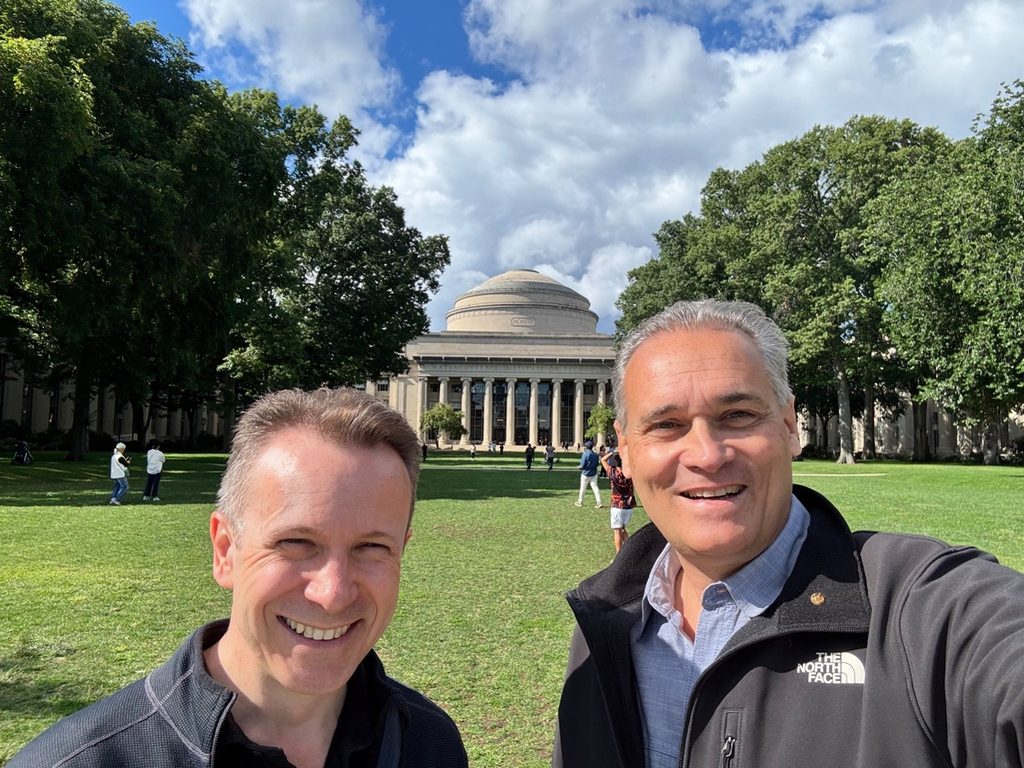
I also visited MIT as the guest of IDIA Visiting Professor Phil Budden, a former British Consul General in Boston who now teaches technological innovation, entrepreneurship, and strategic management at the MIT Sloan School of Management and has an advisory role with Golden Valley in Cheltenham, the innovation campus next to GCHQ. The visit showed how much emphasis MIT places on bringing together technology, management and policymaking.
Research at IDIA
Our staff and PhD researchers work on everything from digital diplomacy and international negotiations to Russia, global cities, peacekeeping, Brexit and the politics of sport. That research feeds straight into our master’s teaching. With our past work with partners such as Chatham House, the Commonwealth Secretariat and Minority Rights Group International, plus 165 embassies and high commissions on our doorstep in London, there’s always plenty to research. Want to find out more?


Loughborough University London
Blogging everything that’s happening at Loughborough University London