The Two Sides of the Moon: What an Evening About Communication Taught Me
Written by Venthan Kathiramalai
On 6 February 2026, Massimo Maltempi and Guglielmina Barbieri (of Max Mal Consulting) ran a workshop at Loughborough University London on interpersonal communication, unconscious bias, and everyday negotiation. I organised and hosted the event together with fellow-IDIA students Nadeen Maher and Glory James. The idea was to run something practical and useful, but the session ended up being more reflective than I expected. Instead of focusing on persuasion or strategy, it kept coming back to awareness of our reactions, our assumptions, and how much a conversation we decide on before it properly begins.
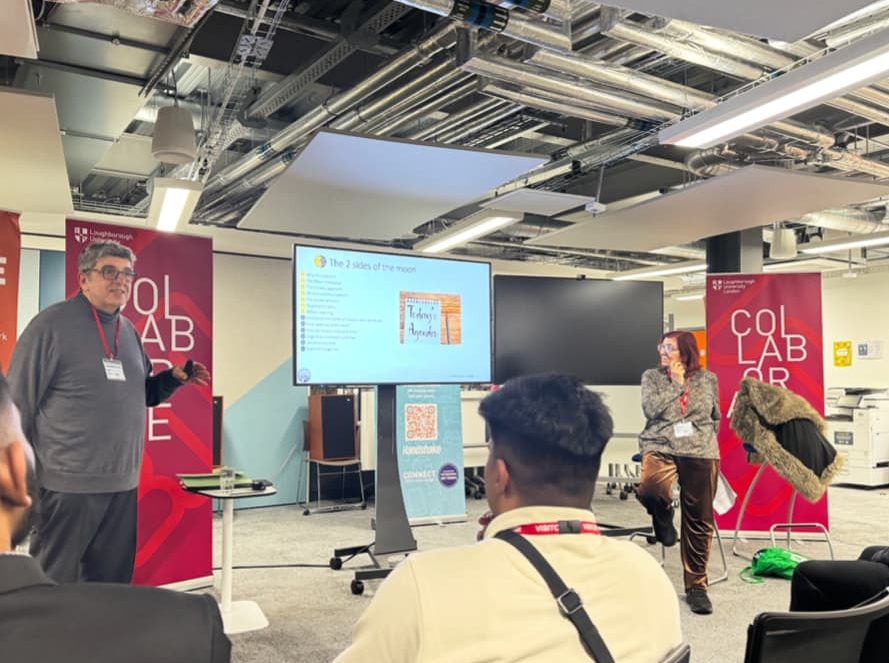
I helped organise the session, so I already knew the topic would be communication and people skills. But it’s one thing to plan an event and another to sit in the room while it’s happening. What stayed with me afterwards was not a specific technique, it was noticing how quickly we react to people before we’ve really given them a chance.
The brain sometimes works to protect us, but it can also make situations worse.
A large part of the discussion centred around unconscious bias and the mental shortcuts we rely on in social situations. The speakers framed this not as a flaw, but as a natural feature of being human. We rarely meet people as blank slates; instead, we meet them as predictions. Within moments of an interaction we have already formed impressions about competence, confidence, and trustworthiness, often before a full sentence has even been completed.
What made the discussion particularly engaging was its realism. The goal was not to eliminate bias but to notice it. Awareness, rather than perfection, was presented as the skill. By slowing down our interpretations, we create space for a person to become more than our first assumption about them, and communication improves almost automatically.
Emotional awareness is not emotional absorption
One idea that stayed with me came from Massimo’s explanation of emotional awareness. He described it as the ability to allow others to express themselves while remaining present and supportive, without taking on their emotional state. The distinction sounds subtle, yet it reframes empathy entirely.
Often, people think supporting someone means sharing their emotional intensity, but this frequently escalates situations rather than resolving them. Emotional awareness instead involves steadiness by listening attentively, acknowledging what is being expressed, and responding constructively without becoming overwhelmed. In practical terms, it is the difference between calming a disagreement and unintentionally amplifying it. The point was not detachment, but balance: understanding others while still remaining grounded yourself.
Asking for favours without it feeling like a favour
The session also touched on something surprisingly practical, asking for help. Many of us either hesitate excessively or overcompensate by trying to persuade too strongly. The suggestion offered was disarmingly simple: clarity, sincerity, and respect. Cooperation tends to emerge naturally when people feel acknowledged rather than managed.
Seen this way, communication becomes less about technique and more about intention. When we stop treating interaction as a small negotiation to win, conversations become easier and far more genuine.
Vision: the antidote to random motivation
Towards the latter part of the workshop, the discussion shifted toward vision setting. The argument was that without a clear “why”, effort easily becomes directionless, leaving us dependent on fluctuating motivation and inspiration. A vision, however, provides orientation. Whether applied to a project or personal development, it acts as a reference point for decisions and adjustments.
Rather than forcing productivity, a clear purpose creates alignment. When circumstances change, which they inevitably do, we still have direction. Motivation may come and go, but a vision continues to guide action.
The psychology in the pictures
Guglielmina’s part of the session brought a noticeably different energy into the room. Where the earlier discussion encouraged reflection, hers made us participate almost immediately. She introduced a series of images and asked us a deceptively simple question: who looks trustworthy?
What followed was slightly uncomfortable in an illuminating way. The photos showed the same person more than once, but taken from different angles, with different facial expressions, posture, and lighting. Almost everyone in the room instinctively preferred one image over the other. We described one version as approachable, competent, and reliable, while the other seemed distant, less warm, or harder to trust. Yet it was the same individual.
The exercise made visible how quickly we construct character from appearance. Small details, a head tilt, a half-smile, the direction of eye contact, can shape judgement before a single word is spoken. We were not evaluating behaviour or values; we were interpreting presentation.
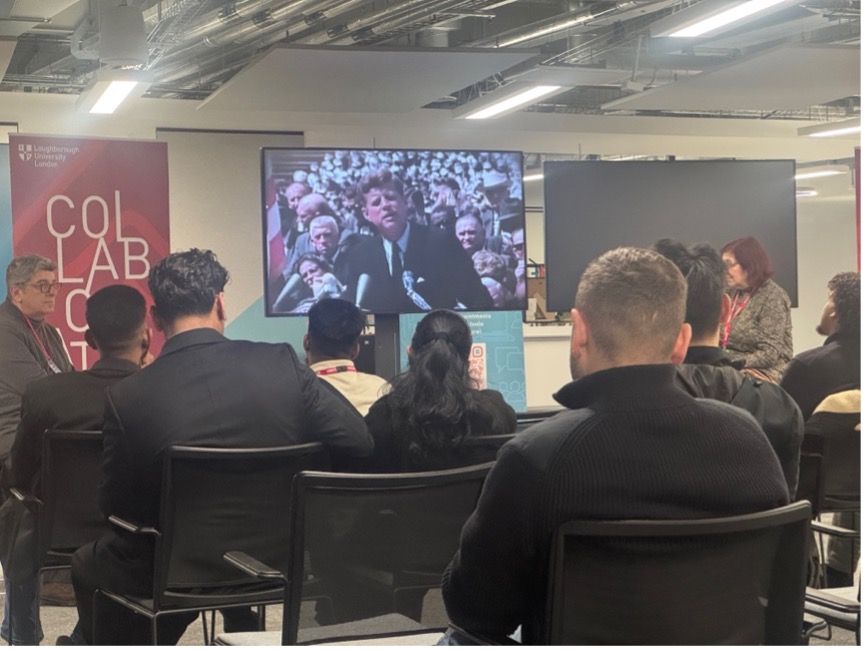
It felt particularly relevant in 2026, where meeting new people has become routine, in classrooms, workplaces, online calls, networking spaces, often at speed, in unfamiliar contexts and online. Our minds try to cope by using past experiences as templates, but those templates easily become blueprints. We begin reacting not to the person in front of us, but to a pattern we recognise from somewhere else.
Guglielmina’s point was not that first impressions disappear, but that they should remain provisional. Awareness allows a pause between perception and conclusion. Without that pause, we risk judging present actions through past experiences, sometimes even past hurts and mistaking recognition for understanding.
The exercise was simple, slightly quirky, and surprisingly revealing. It showed that communication does not begin when someone speaks. It begins the moment we see them, and often, long before we realise we have already decided who they are.
Leaving with fewer techniques but more awareness
By the end, the session felt less like a training workshop and more like a recalibration of attention. There were practical communication tools, certainly, but the lasting takeaway was subtler: effective interaction depends less on saying the perfect thing and more on noticing what is happening while we speak and listen.
The conversations that continued during the networking afterwards suggested many others felt the same. People skills, it seemed, are not tactics to memorise but habits to practise, habits of awareness, patience, and intention. That may take longer than learning a technique, but it also appears to last longer once learned.
Thank you to Massimo Maltempi and Guglielmina Barbieri for leading the session, to the guests who took part so openly, and to Loughborough University London for supporting a different kind of event. Special thanks also to our Director, Dr Tim Oliver, and Nicola Cheloti for their support in making the event possible. And finally, thank you to everyone involved in organising and hosting the evening Nadeen Maher, Glory James and myself for helping bring it together.
The Institute for Diplomacy and International Affairs (IDIA) offers master’s and doctoral programmes designed to meet the evolving demands of today’s world. At IDIA, we work alongside our students to provide them with the essential tools to comprehend these global realities, preparing them for diverse careers in both public and private sectors across the globe. Check out our programmes and apply to study with us here.


Loughborough University London
Blogging everything that’s happening at Loughborough University London