What Ping Pong Diplomacy Still Teaches
By Dr Tim Oliver, Director, Institute for Diplomacy and International Affairs
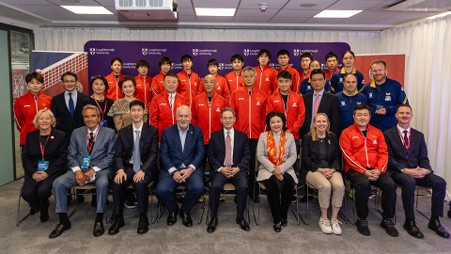
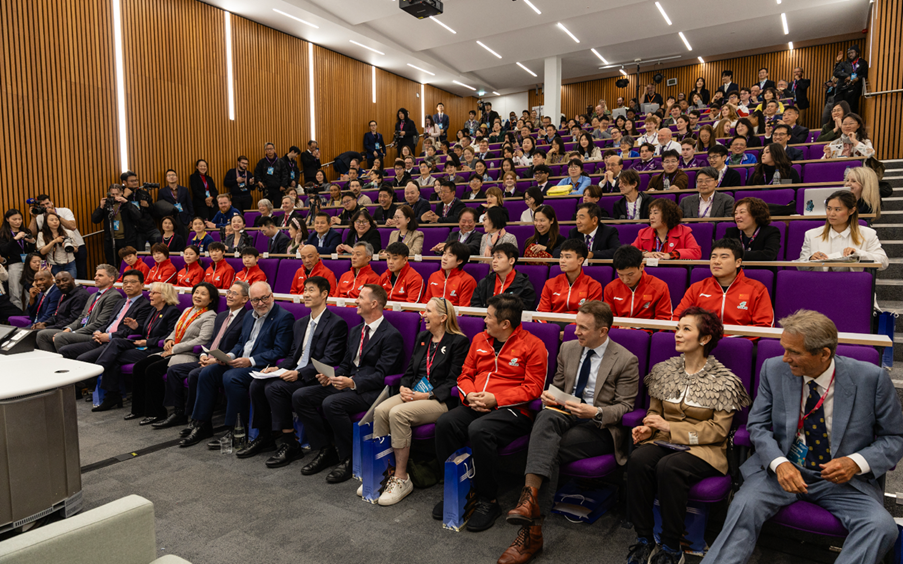
In May this year, Loughborough London hosted China’s national table tennis team, fresh from winning both the men’s and women’s world team titles, at an event to mark the 55th anniversary of ping pong diplomacy.
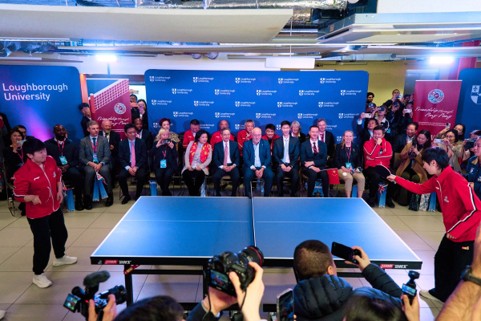
Organised with the Chinese Embassy and attended by the Chinese Ambassador Zheng Zeguang, it followed the ITTF World Team Championships, which had returned to London a century after the city first staged them in 1926. China had taken both the Swaythling and Corbillon Cups. Their visit to Loughborough London, where they played against staff, was Team China’s only non-competition appearance in the UK.
At the event we heard from Loughborough’s Vice-Chancellor, Professor Nick Jennings, from Ambassador Zheng Zeguang, from Wang Liqin of the Chinese Table Tennis Association, and from Sally Lockyer of Table Tennis England.
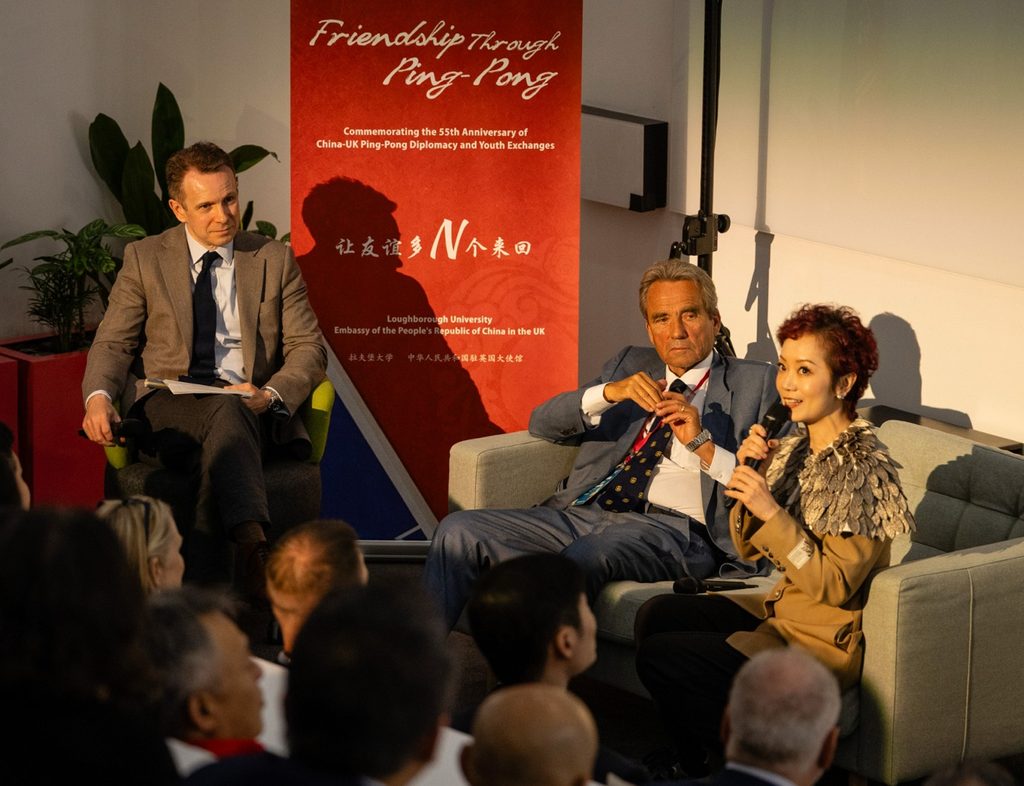
I then chaired a panel on sport and diplomacy with Alan Hydes, the former England international who travelled to China on the 1971 tour, and Jasmine Pang, a Shanghai-based media and cultural executive and founder of Branding Shanghai.
Ping pong diplomacy has become one of those episodes that has gone down in history as one of the twentieth century’s great diplomatic icebreakers. A chance encounter between a US player and a Chinese one at the 1971 world championships in Nagoya, Japan, led to an invitation for table tennis players to visit Beijing. It paved the way for a much bigger visit when, within a year, Nixon went to China.
Beijing and Washington had been exploring ways to build closer relations. What table tennis served up was not a breakthrough but a low-cost, highly visible way of testing whether a thaw in relations would survive contact with domestic opinion in both the US and China.
The invitation was not to the US alone. Teams from England, Canada, Colombia and Nigeria also travelled to China. The US team arrived on 10 April 1971, the first US delegation to visit the People’s Republic of China since 1949.
Sport rarely makes foreign policy. It can, however, create occasions through which foreign policy can be made, and it does so in front of an audience, which makes it useful and risky.
Sport has long been an area where states compete for international standing, and this has only grown since 1971. Efforts to host mega-events involve more effort than many trade negotiations. Sovereign wealth funds invest in clubs, leagues and federations in ways that can reshape the politics and governance of more than the sport. Boycotts, bans and the exclusion of national teams are sensitive and often provocative instruments of diplomacy. Athletes themselves can also become political actors, sometimes to the discomfort of governments and sporting bodies, and sometimes to the discomfort of athletes who find themselves thrust into political controversies they never sought.
Sport as a global industry is worth well over $500 billion a year, and closer to $3 trillion once broadcasting, betting, equipment and sports tourism are counted. Sports tourism alone, at more than $800 billion, is close to five times the $174 billion the OECD’s donors spent on development aid in 2025.
It all adds up to show that sport is a growing part of how international influence is exercised, and it is not something that should be seen as a minor matter in international affairs.
This is what we cover in our MSc Diplomacy and Sport, taught by the Institute for Diplomacy and International Affairs and the Institute for Sport Business. Students examine questions such as why governments invest in sport, how sport shapes national image and international influence, what is meant by “sportswashing”, and when boycotts, bans and sporting sanctions actually work.
Our location on the Queen Elizabeth Olympic Park, in a city with around 165 embassies and high commissions, means practitioners are a short journey away, and events like the ping pong one brings them onto campus.
Fifty-five years after ping pong diplomacy broke the ice in Sino-US relations, the underlying logic remains relevant. Sport offers states a way of meeting in public before they are prepared to meet in private. What began as a sports tour born from an accidental meeting is now recognised as one of the more consequential episodes in twentieth-century diplomacy. That it looked like nothing at the time was the reason for its success, and it remains the reason states continue to find sport useful.


Loughborough University London
Blogging everything that’s happening at Loughborough University London