The Santa Clause: Unwrapping the IP Behind Christmas
Disclaimer: This blog post is for information only. We do not endorse any of the merchandise and we are not affiliated or receive any commission from any companies presented in this blog post.
I am sure you knew, that after going after Easter and Halloween, I will be coming after Christmas next. It is now time to have a look at how many things we love about Christmas are protected by different types of Intellectual Property (IP).
Christmas is a Christian feast celebrating the birth of Jesus Christ and has been held on the 25th of December since around the mid-fourth century. In Pagan times, midwinter would have been celebrated on the winter solstice which generally falls on 21st December. Different countries tend to have different traditions for Christmas, from the type of foods eaten to when and what type of gifts are exchanged. Romanians also have a range of different traditions during the Christmas period.
On the First Day of IP – Copyright for Christmas Classics
I am sure you know by now all about copyright, but in case you missed our other blog posts, in the UK, copyright is set up in the Copyright, Designs and Patents Act (CDPA) 1988. Copyright protects original, human creations (at least for now) that fall into certain categories, like literary, dramatic, musical works, broadcasts and so on.
When it comes to anything related to Christmas, we have protection for your favourite holiday songs, movies and of course books. And, let’s not forget the Christmas jumper.
Let’s have a quick look at holiday songs. All music recordings are protected by copyright, which typically lasts for 70 years from the date of recording. To put this into perspective, only recordings made shortly after the Second World War have now fallen out of copyright. For example, Bing Crosby’s “White Christmas” from the 1942 film Holiday Inn is no longer protected, whereas “Frosty the Snowman,” first recorded in 1950, still has a few years left—along with “Rudolph the Red-Nosed Reindeer,” which predates it by just one year.
However, don’t think you are out of the clear if you use old songs, because while the song (when it was written) might be out of copyright, any recording of old songs made in the last 70 years will still be protected.
You might not have considered Christmas jumpers protected by copyright, but they are. Why? Well, all the patterns, illustrations and Christmassy slogans are an artistic expression which is protected by copyright.
Two Trademarked Turtledoves – Branding the Holidays
Trademarks protect brands and identifiers—such as names, logos, slogans, and distinctive symbols—that distinguish goods or services in the marketplace. A trademark helps prevent consumer confusion and ensures brand recognition. Unlike copyright, trademarks can last indefinitely as long as they are actively used and renewed.
Why are trademarks so important for the holiday season? Well, while Black Friday is still one of the busiest times for retailers, it is followed closely by Christmas gift shopping. A survey done in November reveals that UK consumers desire clothing, textiles and shoes as well as gift vouchers for Christmas. However, as I am sure most of us know, we also spend a lot on themed gift wrapping, themed clothing (Christmas themed jumpers or hoodies), and all the other things associated with Christmas. I don’t know about you, but I also tend to want to get more Christmas ornaments and decorations every year (not that I need any, but that is a different issue altogether), because they are so cute. Which is why many brands will trademark Christmas themed products.
As for holiday trademark some examples include:
The Grinch: Beyond the original 1957 book and its later film adaptations, the story and character are heavily protected. A California limited partnership managing Dr. Seuss’s intellectual property holds 30 registered trademarks related to the Grinch. (I succumbed and got a Grinch themed sweatshirt, that reads Merry Grinchmas).
The Polar Express: Warner Brothers’ 2004 film adaptation of the 1985 children’s book has led to 14 registered trademarks under the studio’s name.
Home Alone: Twentieth Century Fox owns two trademarks tied to its iconic 1990 holiday film.
Coca-Cola’s Santa – The iconic Santa image used in Coca-Cola’s holiday advertising is a trademarked brand element, not just a creative illustration.
Starbucks Holiday Cups – The seasonal cup designs are protected as trademarks because they signal the Starbucks brand to consumers.
Three Patented Presents – Innovation Under the Tree
Patents protect innovations in all types of industry. Like trademarks they need to be registered and have a protection of up to 20 years.
Patents can cover innovative products and technologies that make the festive season special. From unique Christmas tree lights and automated decoration systems to novelty items like musical ornaments or self-heating mugs, inventors often seek patent protection to secure their seasonal creations. Unlike copyright or trademarks, patents protect functional inventions rather than creative expression or branding.
Did you know that the first set of Christmas lights, which was a string of 80 red, white and blue lights, was created by Thomas Edison’s friend and partner in the Edison’s Illumination Company, Edward Johnson in 1882?
On the other hand, LED (Light Emitting Diode) Christmas lights have transformed holiday decorating by offering numerous advantages over traditional incandescent bulbs. They consume far less energy, making them more cost-effective and environmentally friendly, while also producing minimal heat, which reduces fire risks and makes them safer for indoor and outdoor use. Beyond efficiency, LED technology enables vibrant colours, dynamic lighting effects, and innovative designs such as programmable patterns and smart controls, giving decorators endless creative possibilities during the festive season. Many of these innovations have been protected through patents, covering everything from the circuitry and energy-saving mechanisms to advanced features like colour-changing technology and app-controlled lighting systems. LEDs were patented in 1966 by James Biard and Gary Pittman while they worked for Texas Instruments.
Looking away from the shiny fairy lights, we also have patents for or concepts such as group gift cards. Surprisingly, there have been patent applications for Santa’s sleigh—and even inventive methods for feeding his reindeer! Let’s not forget tinsel, candy cane, the Christmas stocking and much more!
Four Calling Clauses – The Legal Language of IP
Just as the carol speaks of calling birds, intellectual property agreements rely on “calling clauses” that set out the essential rules for using and protecting creative works. These clauses form the backbone of contracts such as licenses and assignments. Common examples include the Ownership Clause, which defines who holds the rights; the License Clause, outlining permissions and limitations for use; the Termination Clause, specifying when and how the agreement can end; and the Jurisdiction Clause, determining which country’s laws apply. Each clause plays a vital role in avoiding disputes and ensuring that creators and businesses understand their rights and responsibilities—because in IP law, every word matters.
Five Golden Rights – The Core of Intellectual Property
The expression of ideas in a physical medium is not only protected by copyright, but by many other IP rights. Let’s have a closer look at each:
- Copyright – protects an original intellectual creation, it protects audio-visual works, pictures, graphics, architecture, databases, software, designs, literature, novels, poems, plays, music and video, dramatic works. It prevents a work being (without permission) copied, published, distributed or made available online. It lasts for the lifetime of the author +70 years, protection is automatic, no registration required.
- Trademark – protects distinctive signs that identify brands of products / services. Trademarks protect words, personal names, designs, letters, numerals, colours, shapes, packaging, sounds. Prevents unauthorised use of distinctive signs for the same or related products or services. Registration is required, and if the trademark is used in commerce and renewed, protection does not expire.
- Patent – protects inventions, a new and innovative way of doing something, or solving a technical problem. Inventive products and processes in all lines of businesses are protected. It prevents unauthorised making, using or selling of the patented invention. Registration is required and protection lasts for around 20 years.
- Design rights – design rights protect a new and original visual appearance of a product. Items protected are packages, containers, furnishings, graphic symbols, graphical user interfaces, logos and maps. As the above, it prevents unauthorized use of identical or similar visual appearance for the same kind of products and / or services. Designs do not to be registered, but it is advisable to do so. Unregistered designs are only protected against unauthorised copying and have only 3 years of protection. Registered designs are protected for up to 25 years.
- Trade secrets – protect any type of useful information for business that is secret and kept confidential. It protects any confidential information: business methods, R&D data, financial information, cooking recipes, software, datasets, know-how, algorithms. Prevents others from using the confidential information, as long as it remains a secret. Protection is indefinitely if not revealed. Unlawful disclosure of the confidential information allows to claim monetary compensation.
Six Geese-a-Licensing – How IP Deals Hatch Revenue
Licensing agreements are an important part of holiday merchandising, enabling brands to legally grant permission for their Intellectual Property to be used on festive products. These deals not only create seasonal appeal but also ensure that rights holders maintain control over how their IP—such as trademarks, characters, and logos—is represented. Popular examples include Disney-themed ornaments and branded advent calendars, which leverage the strength of well-known brands to boost consumer demand. By formalizing usage through licensing, companies protect their IP from misuse while generating significant revenue streams during the holiday season. As an example, we have LEGO® which has a number of Disney themed sets. Of course, LEGO® is not the only company which will have licensed material from Disney or other IP rights holders. The Grinch themed sweatshirt I mentioned earlier is a similar licensed holiday product.
Seven Swans-a-Suing – When IP Disputes Make Headlines
The holiday season, with its massive commercial appeal, is a hotbed for Intellectual Property (IP) disputes, proving that even Santa’s workshop needs a legal team. Famous cases like the copyright battles over the movie “It’s a Wonderful Life” (which fell into the public domain due to a clerical error before being reclaimed via rights to the underlying story) and the litigation over the “Elf on the Shelf” figurine against knock-offs like “Elf off the Shelf” (where the parody defence prevailed on the copyright claim) highlight the complex intersection of creativity and commerce. The key lessons learned are that strong, well-documented IP—including clear trademarks on unique character appearances (like Coca-Cola’s distinct Santa) and meticulous records of the creative process for advertising campaigns—is essential.
Eight Rights-a-Monetizing – Turning Creations into Profit
In UK Copyright law, the creator or rights holder (not always one and the same) of a copyrighted work is granted a specific set of exclusive rights to control how their work is used. These rights primarily fall under the umbrella of “copying” and “communication” to the public. The rights holder has the exclusive right to authorise or prohibit:
- Direct or Indirect Copying of the work.
- Issuing Copies of the work to the public.
- Rental or Lending of the work to the public.
- Performing the work in public.
- Broadcasting the work.
- Inclusion of the work in a different work they own copyright to (think world crossovers in films for example, i.e. Avengers meeting The Fantastic 4).
- Adaptation or other alteration of the work.
- Making the work available to the public.
These rights ensure that the financial investment and arrangements made by the rights holders protected, allowing them to monetize their creations.
Nine Ladies Dancing Around Fair Dealing
Holidays also come with parodies and remixes. These often fall under the UK’s fair dealing exception for criticism, review, or parody, provided the use is genuinely transformative and does not compete with the original work. During festive seasons, creators on platforms like YouTube frequently produce humorous remixes of popular songs or holiday-themed parodies, while memes circulate widely across social media. These creative works typically qualify as fair dealing when they add new meaning or commentary, but they must still respect moral rights and avoid excessive copying of the original material.
Ten Lords-a-Leaping into Global IP Laws
Intellectual property protections vary significantly across jurisdictions, creating challenges for global holiday campaigns. While UK law relies on fair dealing exceptions, other regions—such as the U.S.—apply broader fair use principles, and some countries impose stricter limitations on parody or remix rights. Trademark registration, copyright duration, and enforcement mechanisms also differ internationally, meaning a festive advert or meme that is lawful in one country could infringe rights elsewhere. For brands running worldwide holiday promotions, these inconsistencies complicate clearance processes, requiring careful licensing, regional compliance checks, and sometimes tailored content to avoid legal pitfalls.
Eleven Pipers Piping Up About Piracy
Holidays tend to become a hotbed for counterfeits and piracy. Now some might think that is not an issue, some big corporations are not getting richer. The issue is however bigger and more dangerous than that. Counterfeits pose a real threat to others, especially children. Let’s take the Labubu phenomenon (if you are like me and have no kids and no clue what these Labubu are, apparently, they are some form of hot-trend toy) their retail value is high and their resale is even higher which might lead people to fall for counterfeits. Fake toys, like Labubu’s, can pose a serious risk to consumers, they can contain toxic chemicals, can be choking hazards from loose parts, and be of inferior quality. Recent national data highlights the scale of the issue: more than 259,000 counterfeit toys, valued at approximately £3.5 million, have been intercepted at UK borders this year. Among the most frequently targeted items are viral, high-demand products such as Labubu dolls. Shop safe this Christmas, while at the same time being careful not to get into financial struggle. Christmas is about time together, more than what is under the tree (and yes, I know that that is corny, but it is Christmas soon, so let’s go with it).
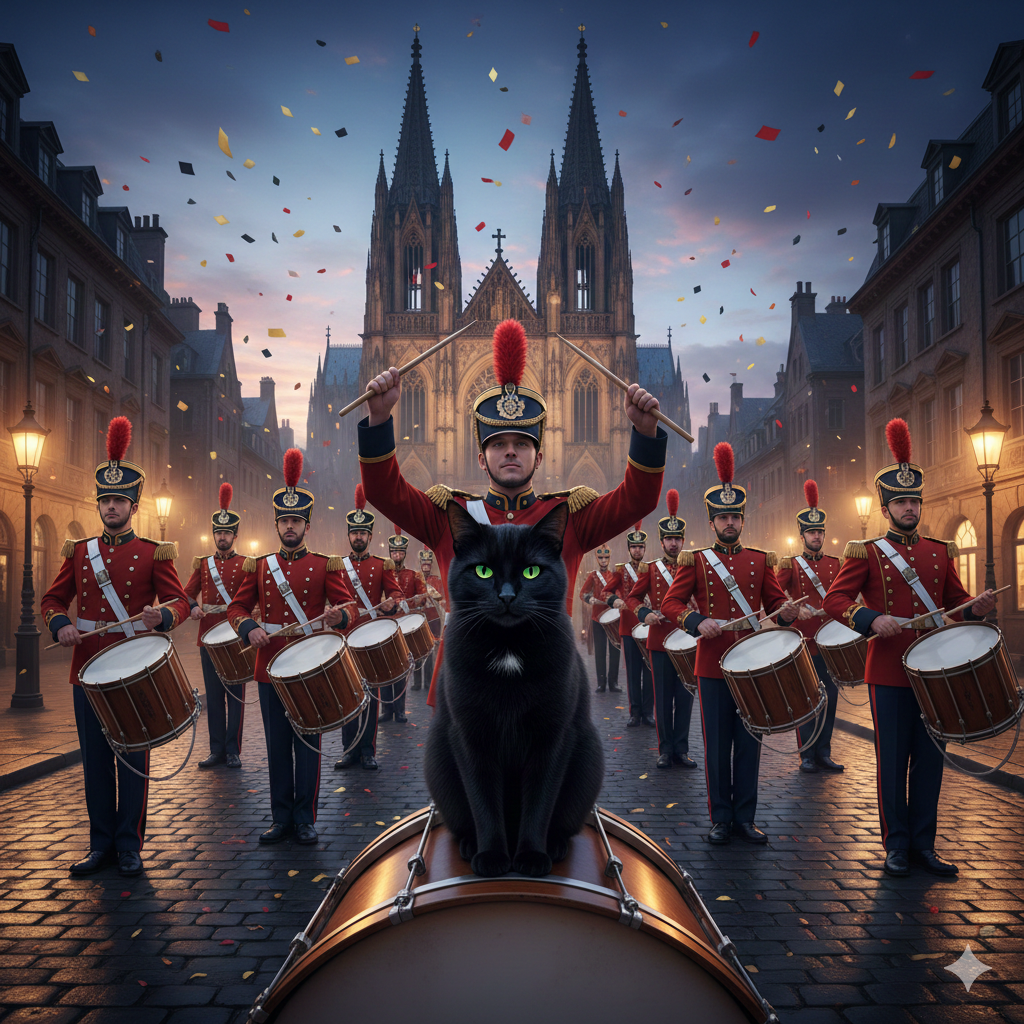
Twelve Drummers Drumming Home the IP Message
Intellectual Property plays a vital role in preserving the magic of the holiday season. From iconic festive songs and beloved characters to creative campaigns and handcrafted designs, IP ensures that creators and brands can share their work without fear of exploitation. When rights are respected, traditions thrive, and innovation continues to bring joy year after year. As we celebrate, let’s support originality—choose authentic products, credit creators, and avoid counterfeit goods. Protecting IP isn’t just a legal obligation; it’s how we keep the spirit of the holidays alive for everyone.
Merry Christmas and Happy Holidays!
The information contained in this blog post should be taken as recommended advice or guidance but should not be taken as legal advice. If in any doubt, please seek proper legal advice.
The images with Copycat and the Twelve Days of Christmas have been created using Copilot and Gemini. All other images are from Adobe Stock Library.


Open Research
Copyright, Open Access and all things Open Research
Join the discussion
2 Comments
Wan AI
I love how you’ve highlighted the history of Christmas and its evolution. The diversity in celebrations across different cultures really shows how the holiday has grown and adapted over time. Makes you think about how even the smallest traditions might be influenced by copyright!
Nano Banana AI
This post really sheds light on how IP law intersects with our holiday traditions. It’s great to see the protection of creative works, but I wonder how this affects smaller creators who want to participate in the holiday spirit.