Ready Player One? Copyright and Gaming Explained
Press Start: Copyright in Video Gaming
This is part 1 of two parts blog series which looks at copyright implications in the gaming world. Part 1 will look at video gaming while part 2 will look at board games. When it comes to video gaming and copyright, it can be a bit of a maze. Because of the complex nature of video games and the multiple parts it contains, it can be difficult to navigate the complexity of copyright. As copyright is territorial, the way video games are perceived and protected in other countries is also a complex matter. However, as usual, we will mainly look at how copyright applies in video games in the UK.
The worldwide gaming market is projected to be around $ 29,48 billion. The UK has around 10,84 million gamers and this community is forecast to increase by 6,64% by 2027. Battle royale games reign supreme as the top online gaming format, according to the Academy of Animated Art. As of March 2025, Fortnite was leading the charts of most viewed hours.
How does copyright law intersect with gaming culture? Let’s read the rulebook to find out.
The Rulebook: What is Copyright in Gaming?
A video game or computer game is an electronic game which is usually played on a device. Video games are generally categorised according to their hardware platform, which includes arcade video games, console games and computer games. More recently, the video game industry has expanded into mobile devices, virtual and augmented reality and remote cloud gaming.
In the UK, copyright law is governed by the Copyright, Designs and Patents Act 1988. While the Act does not list video games as a distinct category of protected works, games are safeguarded through the copyright of their individual components. The underlying computer code or any fixed medium qualifies as a literary work, while the game’s narrative and presentation may be protected as literary or dramatic works. Visual elements such as character designs, artwork, and audio components—including music and sound effects—are also eligible for copyright protection. However, aspects like overall ‘look and feel’ or core gameplay mechanics fall outside the scope of copyright.
For copyright to apply a work needs to be original, and the author’s own intellectual creation. Copyright lasts for the lifetime of the author plus seventy years for any literary, dramatic, musical or artistic works and for fifty years after creation for computer-generated works and sound recordings or broadcasts.
In the UK, as an employee the first copyright owner will be your employer, unless there is an agreement to the contrary. As such, anything you create during your employment as part of your job, copyright will be automatically assigned to the employer. As an example, if you are a games developer and you work for EA Games, whatever you develop for them will belong to them. Issues might arise when freelance developers or other third parties are commissioned to create aspects of a game. By default, the copyright will belong to the freelance developer or third party unless an agreement to the contrary exists.
Levelling up: Intellectual Property (IP) protection
Shielding inventions with Patents
Copyright is not the only protection applied to the video games. There are also the other types of protection, like patents. Patents in video games typically protect innovative technical solutions rather than creative content. They can cover aspects like game engines, rendering techniques, networking systems, or unique hardware integrations that enable new gameplay experiences. Unlike copyrights, which safeguard artistic elements such as graphics and music, patents focus on functional inventions that provide a novel and non-obvious technical advantage. This means developers who create groundbreaking mechanics or technologies—such as advanced physics engines or VR interaction systems—may seek patents to secure exclusive rights and prevent competitors from using the same innovations.
Some notable gaming technology patents include:
- In 1983, Nintendo filed a patent for a “multi-directional electrical switch,” which most gamers recognize today as the iconic D-pad.
- Nintendo also secured a patent for a “video game system providing physical sensation,” the technology behind the Rumble Pak that paved the way for haptic feedback in modern controllers.
- Additionally, there are over 10,000 patent entries on Espacenet related to Virtual Reality (VR), highlighting the vast innovation in immersive gaming experiences.
Gaining Trademark protection
Classic titles like Pac-Man®, Donkey Kong®, and Space Invaders® have remained popular for over three decades, continuing to be recognized and played worldwide. One of the keyways these games have been protected is through their branding, often achieved by registering trademarks for their names and logos. In fact, Pac-Man® has become one of the most iconic games globally, and its main character is itself safeguarded as a registered trademark. This form of protection helps preserve the identity and commercial value of these legendary titles.
Fixing bugs: Game creation and IP issues
Intellectual property (IP) protection for video games—through copyright, patents, and trademarks—faces challenges similar to those seen in the copyrightability of software, as both are relatively new areas of IP law. The video game industry thrives on reusing and adapting concepts from earlier titles to create innovative gameplay experiences, while avoiding unlawful direct copying of existing games. This dynamic, combined with the fact that games are not confined to a fixed medium, makes defining clear IP protections particularly complex.
Common assets
Common game assets such as textures, 3D models, audio files, and user interface elements are primarily protected under UK law through copyright, which applies automatically when these assets are created and covers artistic works, sound recordings, and animations. In addition, design rights can safeguard the visual appearance of characters or UI components, while trademarks protect distinctive logos or branding used within the game. Developers often rely on licensing agreements for third-party assets and may use trade secrets to secure proprietary techniques or source files. These protections ensure that creators maintain control over the use and distribution of their original assets.
Mods and fan creations
Modding and fan creations often exist in a grey area of copyright law. Mods—user-made modifications to games—and fan works like art, stories, or videos typically build upon copyrighted material owned by the original creators. While these projects can foster creativity and community engagement, they may infringe on exclusive rights such as reproduction or derivative works under copyright law. Some companies tolerate or even encourage modding through licenses or community guidelines, while others enforce strict takedowns. Ultimately, legality depends on factors like permission, fair dealing, and whether the work competes with or harms the original market.
Game engine
A game engine is a framework that provides tools like rendering, audio, physics, and AI systems for building games. Because certain design elements and background processes are dictated by the engine, they often appear in all games created with it and fall outside copyright protection. Similarities due to shared source code or engine limitations are not considered copying. Large publishers often avoid these constraints by developing proprietary engines.
Contributors
Contributions that do not directly involve writing the game’s code are generally not protected as literary works under copyright law. However, these elements may fall under protection if an audiovisual copyright is obtained. Regarding authorship, most contributors are employees, so their work is typically classified as “work for hire,” meaning the rights belong to the employer rather than the individual. Music, on the other hand, is often outsourced to third parties rather than created in-house by game developers. In such cases, the arrangement may not qualify as a work for hire.
Piracy
Video game piracy and illegal distribution pose significant challenges to the gaming industry. Piracy involves obtaining and playing games without paying for them, often through unauthorized downloads or cracked versions. Illegal distribution extends this issue by sharing copyrighted games without permission, whether through torrent sites, file-sharing platforms, or selling counterfeit copies. These practices violate copyright law, deprive developers of revenue, and can harm players through malware or compromised files. While some argue piracy stems from high prices or limited access, it remains unlawful and undermines the sustainability of game development.
Cross border issues
Cross-border copyright issues arise when games, mods, or fan creations are shared internationally, often through digital platforms. Copyright laws vary by country, meaning what is considered fair dealing or permissible in one jurisdiction may be illegal in another. This creates challenges for enforcement, especially with piracy and illegal distribution, which often occur across borders through torrent sites or cloud services. Game developers and publishers rely on international treaties like the Berne Convention and agreements such as TRIPS to protect their works globally, but practical enforcement remains complex due to differing legal standards and limited jurisdiction over foreign actors.
World sharing: Licensing
Games would not be the same without music, different characters, or cars. In cases such as these, games developers or publishers will have to get licensing agreements from third-party copyright holders to use that material. Some of these licensing options can be perpetual or can have a limited time. For example, the Forza Motorsport series includes realistic models of numerous existing car models which are licensed from the car manufacturers. These licensing terms are limited, requiring publisher Microsoft to pull the game from sale roughly four years after release.
Go Ape: King Kong v Donkey Kong
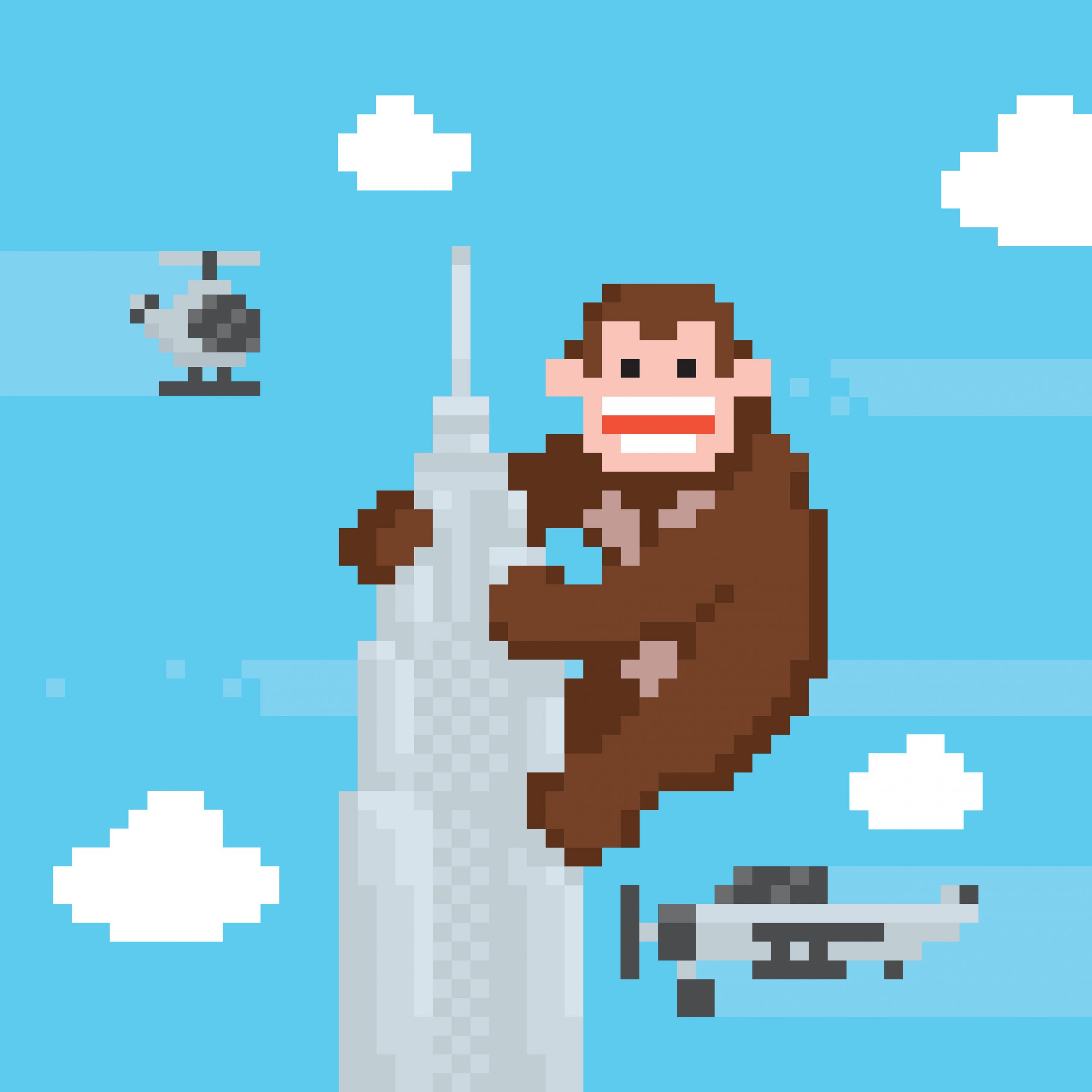
In the early 1980s, Nintendo’s Donkey Kong became a global sensation, introducing players to Jumpman (later Mario) and a mischievous ape. But success brought legal trouble. In 1982, Universal Studios sued Nintendo, claiming Donkey Kong infringed on their rights to King Kong.
Universal asserted that:
- They owned exclusive rights to King Kong.
- The similarities between the two apes and the damsel-in-distress storyline would confuse consumers.
They even pressured Nintendo’s partners, like Coleco, into paying royalties. Nintendo fought back, pointing out:
- Universal had previously admitted King Kong was in the public domain.
- There was no likelihood of consumer confusion.
- Donkey Kong was a unique, humorous creation—not a copy.
In 1983, Judge Robert W. Sweet ruled in Nintendo’s favour:
- Universal acted in bad faith.
- King Kong was not exclusively owned by Universal.
- No trademark infringement occurred.
The Second Circuit upheld the decision in 1984, cementing Nintendo’s victory.
This case set important precedents:
- Public domain works cannot be monopolized.
- Trademark law hinges on consumer confusion, not mere similarity.
- Aggressive IP enforcement without solid grounds can backfire.
- Creative reinterpretations and parody often enjoy legal protection.
Nintendo’s win boosted confidence in the gaming industry and paved the way for bold innovation.
Winning the Game: Conclusion
Copyright law and other intellectual property protections can be complex and difficult to navigate in the context of video games, particularly because copyright is territorial and varies across jurisdictions. This territorial nature means that enforcement and interpretation differ globally, creating uncertainty for developers, publishers, and fans alike. It is important to remember that protection does not apply to the game as a single entity but to its individual components—such as code, artwork, music, and narrative elements—which are all safeguarded under copyright. Piracy and illegal distribution undermine these protections, causing financial and reputational harm not only to publishers but also to the creative teams behind the games. As the industry continues to evolve, understanding these legal frameworks is essential to balancing innovation, fan engagement, and respect for creators’ rights.
The information contained in this blog post should be taken as recommended advice or guidance but should not be taken as legal advice. If in any doubt, please seek proper legal advice. All images are downloaded from Adobe Stock library.


Open Research
Copyright, Open Access and all things Open Research
Join the discussion
2 Comments
flux 2
The territorial nature of copyright is especially interesting when it comes to international gaming communities. How do developers handle licensing when a game becomes popular in multiple countries?
Cristina Rusu
In general big game developers, like EA Games for example, would have a team that would deal with global licensing. Smaller developers might struggle, and would have to measure their launch.