Love data? Then license it!
It’s International Love Data Week, 9-13 February 2026 <3 It’s the one week of the year when we come together to raise awareness around data and talk about the issues in using or reusing them.
Data of course does come with copyright considerations, especially when using third-party data or when using your own created data.
What data are we talking about?
No, we’re not just talking about numbers, although quantitative measures are definitely data. Data can be anything that comes together to inform findings – it could be interviews, videos, performances, or 3D printed objects. Research outputs, such as journal articles, conference papers, and performances, can be used as data too. It’s worth thinking in terms of your own data, but also what other research-related material you’re generating that could be data for someone else.
In general, unless there is an agreement to the contrary, what you create will belong to you, you will be the first copyright owner or rights holder. Copyright is an automatic right applied to original creations, as long as they are created by a “natural” person, aka a human.
Data sharing
You can do two things with your data: use it to inform your findings (obviously) and share it. You can do one or the other, you can do both. There are several good reasons to share your data. As your data underpins your findings, sharing your data is a way to validate your findings. It gives the reader some way of tracing back to where you found your conclusions, so that they can follow you to the end. Future researchers might reuse your data, which is a research impact in-and-of itself, and it might also save them the time and money they would have spent collecting the same data again. You might also find new audience via your shared data, audiences who don’t have access to journal articles.
Data and copyright
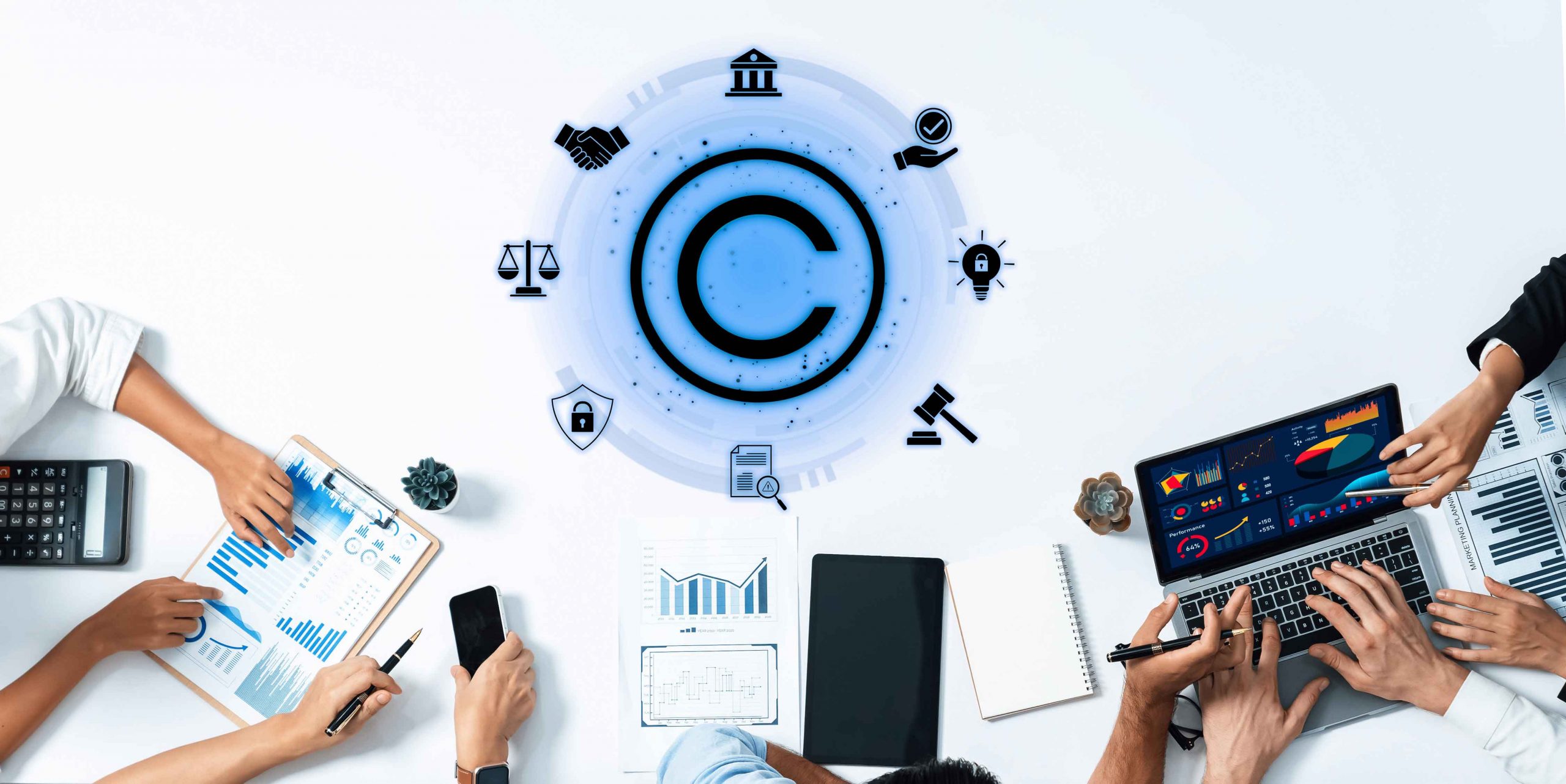
You’re not giving your data away if you share it. Anything you put out there is usually automatically under copyright (under UK law at least), unless you say otherwise. This is true for all forms of data, from spreadsheets to squiggles. Your data is your data until you relinquish the copyright.
It is important to note that for protection to occur, it must fall into certain categories: literary, dramatic, musical, artistic, broadcasts, sound recordings and films and typographic works. Copyright does not protect ideas, facts or equations, merely the expression of them.
Copyright license options
The default copyright licence in the UK is All Rights Reserved. If you don’t say anything about the copyright, this is the one that applies. It allows future users to look at your data and anything else they would need permission for. Since a big benefit of sharing data is reuse, a Creative Commons licence is a much better option.
Creative Commons is a copyright licence with certain permissions and restrictions baked in. The base licence is CC-BY: Creative Commons Attribution. This allows future users to reuse the data provided they cite you – standard practice in academia.
Then you can have some add-ons: Non-commercial (NC) means that future users may not sell your data without separate permissions, No Derivatives (ND) means that no changes can be made to your data and Share Alike (SA) requires future users to reshare (if they do) under the same license that you’ve put on.
It makes little sense to use ND for data – the point of data is to derive something, isn’t it? And Share-Alike is oddly restrictive – there might be very good reasons to change the data. At Loughborough University, we recommend the Creative Commons Attribution Non-commercial (CC-BY-NC) license as the default for data.
If you wish to be even more generous you can always share your data under CC0, meaning you relinquish all rights, and the data has gone directly into the public domain. No attribution is legally necessary – although, ethically, you should always cite the work of others.
Secondary data & license considerations
You might be a researcher who doesn’t generate their own data and reuses data that others have shared. Knowledge of copyright license is essential for you, too. If the data isn’t licensed for reuse, then you can’t reuse it. Just being publicly available does not mean that you are allowed to use it. Social media data, for example, is owned by someone who might or might not have given permission for their material to be reused in research. If you’re going through a data provider (like a social media platform), you may have to comply with their terms and conditions, as well as the copyright. If you wish to re-share third-party data, unless it is under a Creative Commons licence, you might need to ask for permission to use it (potentially) or share it (definitely).
Tl;dr
- Just about anything can be used as data;
- Data sharing is good;
- Use a Creative Commons licence to make reuse clear;
- Consider a CC-BY-ND licence for your data;
- Always check licences before reusing others’ data.
Last word
Data sharing is good, and the complexities should not stand in the way of that. If you need any assistance, contact the Copyright and Licensing Manager or the Open Research Manager for Data and Methods.
To help, we have also created a useful guide How to keep data sharing legal – A quick guide. You can also read more about The State of Open Data on Springer Nature website. And if you need more evidence that Open Data is the way to go, why not have a read of the 2025 report on Open Data?! The future is Open!
So go ahead, Love your Data!
And Subscribe!


Open Research
Copyright, Open Access and all things Open Research