Pass Go, Collect Copyright: The Legal Side of Board Games
The game is afoot
Who does not remember family board game nights?! The gloat of the winners and the dejection of the losers. Welcome to Part 2 of the games and copyright series. Part 1 looked at video gaming.
Unlike video games, I absolutely love board games, which is why I have so many of them. The classics: Monopoly (York version), Cluedo, Labyrinth, Carcassonne, as well as many Disney inspired board games like Villainous and Hocus Pocus. I am also a fan of Sherlock Holmes and Agatha Christie, so I own 221B Baker Street, Scotland Yard and Mr Jack and Agatha Christie: Death on the Cards. And many, many more…. really, a whole lot more. I also tend to want to buy more as well.
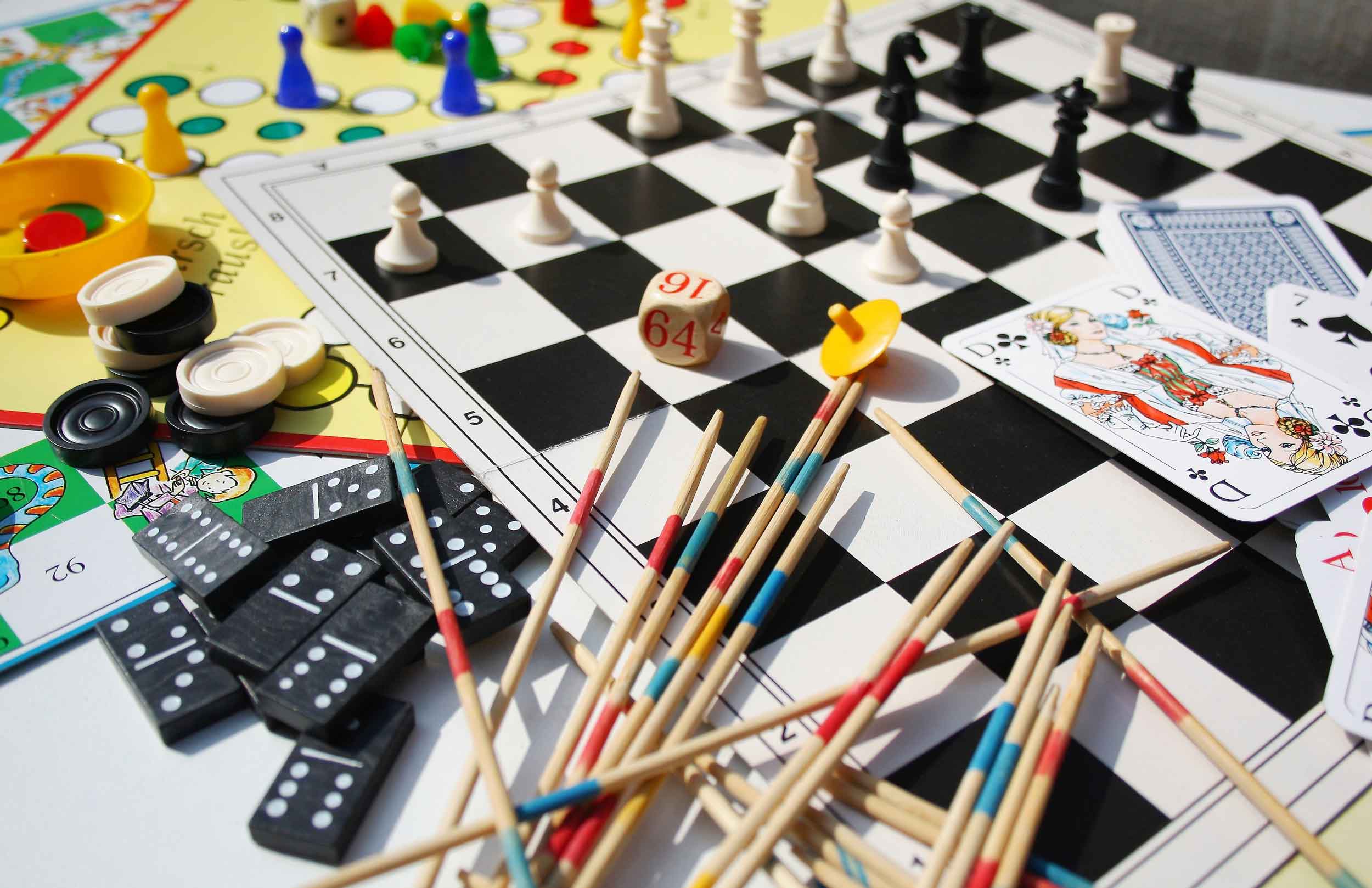
Now, you might wonder why I am so obsessed with board games. Growing up in communist / post-communist Romania, you did not have much to do. During communist era, you had state chosen propaganda on telly and Dallas (I know right?! The idea was Romanians would see how “evil” capitalism was and would never want it…. That did not turn out as they hoped). Also, there would be no electricity after 6 pm. There are only so many books you can read (and even those would be state censored). So, we played board games, again no capitalist board games, but capitalist rip-off board games (IP protection anyone?). We had a game called Bunul gospodar, the communist version of Monopoly. We played chess, Rummikub and Mikado (or what English people call pick-up-sticks. No comment on the name….).
However, did you know that like with everything else I tend to quash its beauty and make it more legal, board games are protected by a host of Intellectual Property rights?! You did not? Well, what are we waiting for.
What’s in the Box? Breaking Down a Board Game
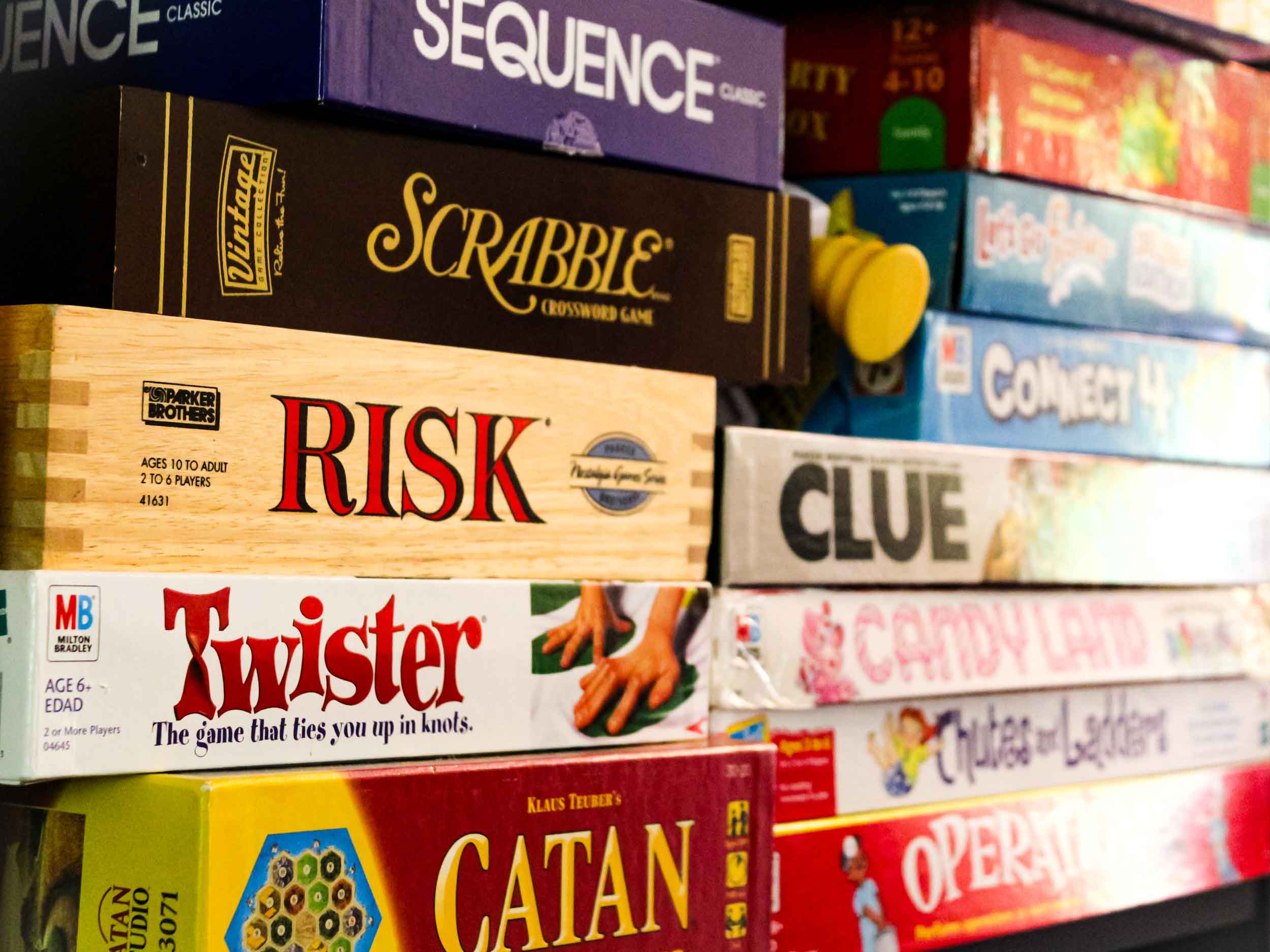
You got yourself that new board game you have been eyeing for a long time. It is finally game night, and you open the box which is filled with:
- A set of rules or mechanics (how the game is played)
- Artwork and visual design (board layout, cards, box art)
- Written materials (rulebook, flavour text, story elements)
- Physical components (tokens, dice, cards)
- Branding (the game’s name and logo)
Each of these can be treated differently under intellectual property law, which is why things are not always as straightforward as “this game is protected.”
The Rules of the Game: Ideas vs Expression
As I have mentioned previously, copyright does not protect ideas, but it protects the expression of that idea in tangible form.
When we look at board games there are some similarities with other games: you need to roll dice to do something, you trade resources, you build structures, etc. However, the way these ideas are expressed through the written rules, the artwork accompanying them, the design, the components, the brands, all these can be protected.
If I say the word Monopoly, you already have a picture in your mind about how the board looks, the cards, the dice and the components and what these components are: the Scottie dog, the top hat, race car, thimble, etc. Same with other popular games, like Catan or Ticket to Ride.
This is why you have similar mechanics in games, the ideas, but the execution of that will be protected by different rights.
Playing the IP game: Longterm strategy
Copyright
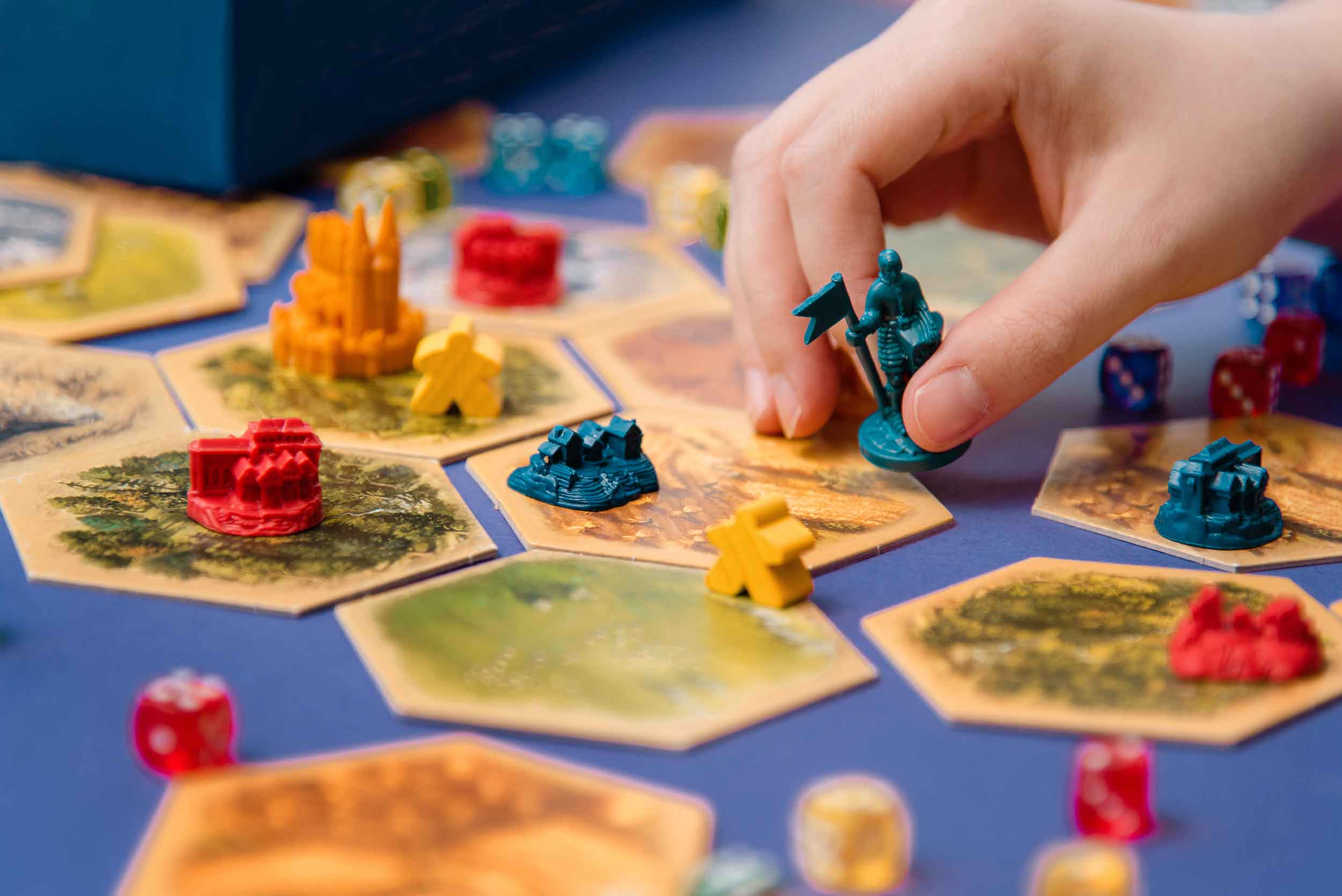
Copyright law protects the original expression of ideas as they appear in creative works. When it comes to board games, this covers elements such as characters, narratives, artwork, names, and settings. For example, the board game Catan is protected by copyright in its visual aspects, including the design of its board and playing cards.
Design rights
Design rights protect the visual appearance of physical components like the board, cards, and game pieces. Registered design rights can offer longer and stronger protection, whereas unregistered rights arise automatically but are more limited. Think about the Harry Potter chess game, it is distinctive enough to warrant design protection.
Trademark
Trademark protection enables owners to register names, logos, and slogans in order to safeguard the identity and authenticity of their products. However, this does not grant ownership over the words or elements themselves; rather, it prevents others from misrepresenting their products as originating from the same source. For example, although Hasbro cannot stop people from using the word “Monopoly” in a general sense, it can take legal action against anyone who uses the “Monopoly” trademark in a way that suggests an official connection without permission.
Patents
Patents, in contrast, are primarily designed to protect inventions such as machines and technical processes. To be patentable, something must have a practical function or perform a specific task. While the idea behind a board game itself cannot be patented, any novel devices or technical elements used within the game may qualify for patent protection independently of the game as a whole.
Free to Play: What Copyright Doesn’t Protect
On the other hand, several key aspects of board games are not protected by copyright:
- Game mechanics (e.g. “draw a card,” “roll and move,” “trade resources”);
- General concepts (such as cooperation, hidden roles, or trivia formats);
- Basic gameplay structures.
The reasons why are simple; they are game mechanics. Most games follow same rules, you move across a board, you roll some dice, you trade resources. As an example:
- There are dozens of trivia games
- Multiple games use deck-building mechanics after Dominion
- Many games involve resource gathering and trading like Catan
These ideas are part of the shared “toolkit” of game design. Consider Trivial Pursuit. There are a number of games similar to that: Outsmarted, Pub Trivia, and way too many to list. While they are all different, they share a same functionality, answering questions around facts. Facts cannot be copyrighted, they just are. It is a fact that Paris is the capital of France. How you decide to present this fact in a quiz game, that is another matter.
A well-known case involving board games is the Trivial Pursuit litigation (Horn Abbot Ltd v. Hewson, 1987). In this case, the creators of Trivial Pursuit were sued by Hughie Hewson, who claimed the game copied his earlier trivia game idea. The court ultimately rejected the claim, emphasising that copyright does not protect general ideas or concepts—such as a quiz-based board game—but only the specific way those ideas are expressed. Whilst both games involved answering trivia questions, there was no substantial copying of Hewson’s original expression (such as specific questions, wording, or design). The case reinforces the principle that game mechanics and general formats remain free for others to use, even if they are commercially successful.
Game Over (or Is It?): Key Takeaways
You have gotten to the end of the game. The winner takes it all, and the loser is standing small…sorry, I had to do it. Board games are fun, engaging and a treasure trove of IP protection.
Board games are a great example of how copyright draws that line: the mechanics are free for anyone to use, but the creative choices: the artwork, the wording, the overall look and feel, are where protection sits.
So next time you’re rolling the dice or dealing out cards, it’s worth remembering that there’s more going on than just gameplay. Behind every board (and every heated rule dispute) is a quiet framework of intellectual property doing its job.
Win or lose, at least you’ll know you’re playing by the legal rules as well as the game’s. So, book that game night and have a blast!

The information contained in this blog post should be taken as recommended advice or guidance but should not be taken as legal advice. If in any doubt, please seek proper legal advice. Images licensed from Adobe Stock. Some image use is editorial only.


Open Research
Copyright, Open Access and all things Open Research