From the Vice-Chancellor – April 2026
In my newsletter this month: Our People and Culture strategy, the new Research Academy, our new Flagship Research Institutes, study identifies pressure wave in football heading, and Team England kit launched.

Making progress – our People and Culture Strategy
Following the success of Project Expectations, we’ve been taking forward a number of new approaches that shape how we all work, lead and develop at the University, including the development of our first ever People and Culture strategy, which has recently been approved by Council. Over the next four years, this will guide how we shape our colleague experience and approach our development, wellbeing and leadership in response to staff survey feedback, helping to maintain Loughborough’s strong position in the sector.
One of the early deliverables of the strategy is the introduction of GLOW Conversations. Colleagues from around half of our Schools and Professional Services are now having GLOW conversations during this pilot year, with strong engagement from managers with training and use of the resources available.
Importantly, we’re beginning to hear what having GLOW conversations feels like in practice. Colleagues are telling us they’re having more focused and meaningful discussions using the GLOW Conversations approach, with a clear emphasis on what matters most in their role as well as the development that will support them. In some cases, these conversations are helping to raise important issues earlier, such as support around wellbeing, workload, day-to-day challenges, or longer-term development.
One member of staff said that being able to talk about their wellbeing and work-life balance in their GLOW Conversations, and to be listened to and not judged, had been amazing. Another said that having shorter term objectives, as opposed to 12-month ones under the previous Performance and Development Review process, had been helpful, saying “I can see how I’m moving towards achieving these since the introduction of GLOW Conversations.”
Creating space for regular, open conversations feels particularly important at the moment and can really help us all to feel supported. While it’s still early, there is a growing sense that these small, ongoing conversations are starting to make a real difference.
Our expectation is that GLOW Conversations will continue to roll out across the University over the coming months, with all areas moving into this approach by the end of the year. By taking a phased approach, it ensures that we can build on what we’re learning, support managers and teams as they move to GLOW Conversations and share our successes along the way.
Thank you to everyone who is already engaging with GLOW Conversations and for helping to shape this new approach for all colleagues.
Loughborough University Research Academy formally launched
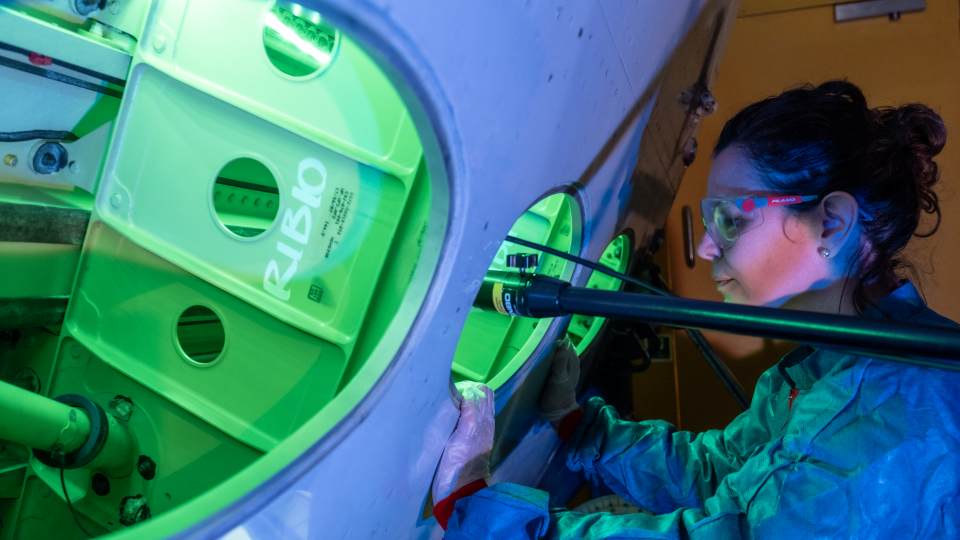
Last week we launched the new Loughborough University Research Academy (LURA), which will help us to create a more connected and supported research community and drive the transformative cultural change to position Loughborough as a global research powerhouse.
The establishment of LURA, one of the priorities within our Research and Innovation core plan, has been made possible thanks to the very generous philanthropic donation, the largest in our history, from Loughborough alum Chris Gill. I was delighted to be able to formally thank Chris for his incredible generosity at the launch event.
Over the next five years, LURA will enable us to offer opportunities to more than 4,000 staff and doctoral researchers through tailored support and development programmes and support current students who are keen to explore a future career in research. It will also allow us to accelerate and amplify the impact of our innovative research that will help to shape global change.
LURA will be housed in the Angela Marmont building in a state of the art, modern, high-specification and inspiring space, funded by Chris’s donation.

Flagship Research Institutes launched
This week the University Executive Board approved the formation of six new virtual Flagship Research Institutes, aligned to the University’s three strategic themes, to support our research ambitions and enhance our global impact.
Each of the Flagship Research Institutes represents a distinct area of our research excellence and will address the major societal, industrial and global challenges facing us today. They cover Clean Energy, Culture and Society, Digital Futures, Healthy Living, Responsible Manufacturing, and Women in Sport.
The Institutes will act as significant interdisciplinary platforms through which to connect existing areas of excellence, strengthen collaboration across disciplines, deepen engagement with external partners, and build a stronger institutional identity around a set of globally significant themes. They will enable us to take a more focused and effective approach to attracting and supporting large-scale research funding bringing in additional income, and leading ambitious, high-impact research programmes.
The Institutes will also help us to enhance our thriving research culture. Each will be led by an Associate Pro Vice-Chancellor (APVCs)/Director, appointed from our existing staff, who will work part-time in the role.
The Flagship Research Institutes’ APVCs will build on the work of the previous Associate Pro Vice-Chancellors for the three strategic themes, whose term of office finishes at the end of July. Thank you to Professor John Downey and Dr Kathryn North (Climate Change and Net Zero), Professor Emily Keightley and Professor Rebecca Cain (Vibrant and Inclusive Communities), and Professor David Fletcher and Professor Diwei Zhou (Sport, Health and Wellbeing) for their work in laying the foundations for this important next step in our strategic research ambition.
Research identifies pressure wave in football heading
One of our core strategic priorities is to undertake research, often in partnership with global organisations, that has the potential to bring about meaningful change. Our recently published research which identified a previously undetected pressure wave in football heading is a perfect example.
The study, which was led by our Sports Technology Institute and philanthropically funded by The Football Association, has identified a mechanism of energy transfer to the brain from football headers – a finding that could prove significant in understanding the mechanics of headers and inform future research into long-term player health.
Football is played by over 260 million players worldwide, with heading one of the fundamental skills of the game. But repetitive headers through a player’s career have been linked to an increased risk of neurodegenerative diseases in later life.
Our researchers studied ball-head impacts at match speeds, with a range of footballs from throughout the last century and an advanced surrogate head model. Using a specialist pressure sensor positioned within the brain model, they observed, for the first time, a distinctive pressure wave that transfers energy into the frontal region. The research showed the magnitude of this energy transfer varied by up to 55x across historical and modern ball types.
The findings provide opportunities to work towards ball designs and testing specifications that minimise energy transfer into the brain.
The results of the study have gained widespread interest. The researchers produced a targeted briefing for stakeholders such as FIFA, adidas, football governing bodies, player associations, charities and global ball manufacturers to ensure they were fully informed, with a clear and accurate understanding of the findings ahead of the wider release of the study. The research has also been picked up by major national and international media outlets, including the BBC, The Times and the New York Times.
Commonwealth Games Team England kit revealed
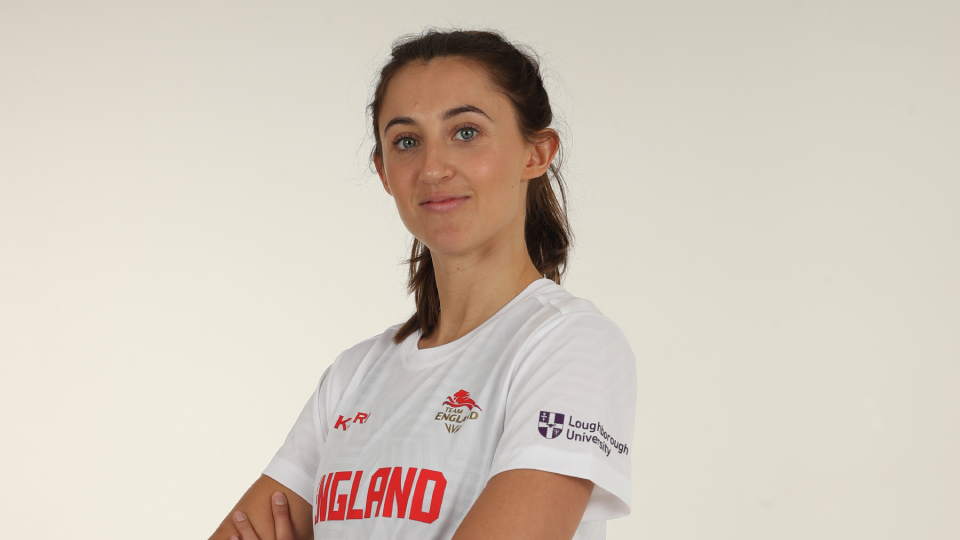
This month Team England revealed the kit its athletes will wear for the 2026 Commonwealth Games this summer and it was great to see the Loughborough University logo proudly featured on the sleeves of the medal ceremony attire.
The use of our logo on the new kit is part of the value-in-kind landmark agreement we signed earlier this year to be the official University Partner of Team England for the 2026 Commonwealth Games in Glasgow and the 2027 Commonwealth Youth Games, which will take place in Malta. As well as our logo on the ceremonial kit, we will host Team England for its immersion camps across multiple sports ahead of the Games and welcome all Team England staff and athletes to campus for Kitting Out, where they will be provided with all their kit, including ceremonial, village, training and competition wear.
The new kit, designed in collaboration with Kukri Sports, takes inspiration from Glasgow’s distinctive character, blending bold street art influences with the work of renowned Scottish designer Charles Rennie Mackintosh. Sustainability has also been key, with more recycled materials incorporated, improved durability and reduced manufacturing waste.
Athletes will have the option of competing in either red or white kits.
While squad selections for the Commonwealth Games are still taking place, I’m confident that we’ll have many Loughborough-linked athletes competing for Team England in the new kit, as well as athletes selected for other nations’ teams. I’m sure you’ll join me in wishing all the Loughborough athletes the very best with their preparations for the Games, and I look forward to seeing our University logo on display on the podium!

General Assembly – Wednesday 6 May, 2pm-3pm
Get an update on the University Strategy and our Core Plans, celebrate our successes, discuss our institutional priorities, and find out more about other announcements and events.

National accreditation for Loughborough
The University has been accredited as a UK Sport Elite Training Centre, recognising its role in supporting Olympic and Paralympic athletes to achieve success on the world stage.

Loughborough Future Makers
A call has gone out to invite students to help shape the Education and Student Experience, as part of the Students’ Union’s Future Makers programme.


Vice-Chancellor's Communications
Opinions and comment from the Vice-Chancellor, Professor Nick Jennings