From the Vice-Chancellor – November 2025
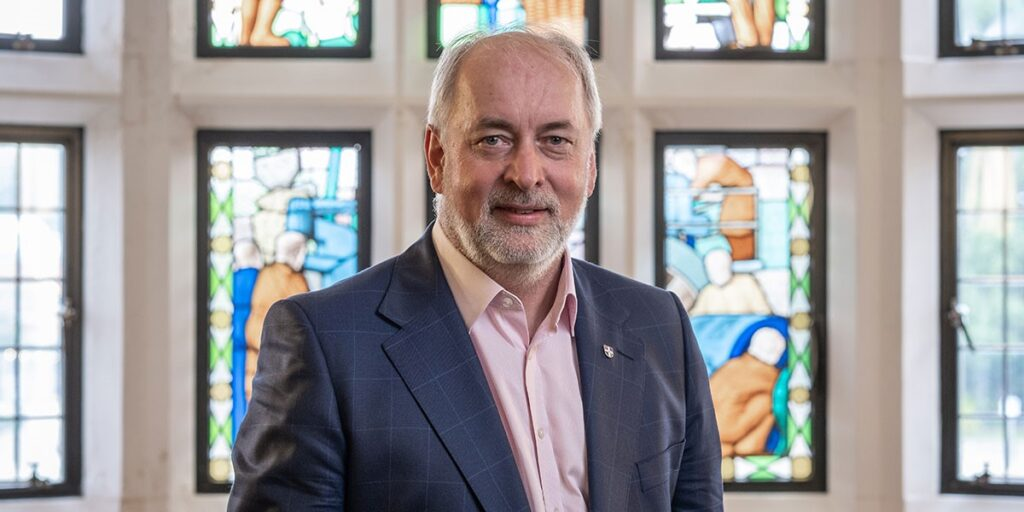
In my November newsletter: Loughborough’s eighth Queen Elizabeth Prize, academics play a key role at COP30, preparations for REF, and UUK’s CEO Vivienne Stern visits the University.
Loughborough awarded its eighth Queen Elizabeth Prize for Education
At a ceremony this week last night at St James’s Palace in London, it was announced that Loughborough University has been awarded a Queen Elizabeth Prize for Higher and Further Education, in recognition of our pioneering contributions to Para and disability sport. This is a hugely prestigious honour. Loughborough now ranks among the most highly acclaimed institutions for the Queen Elizabeth Prizes with eight awards in total – only the University of Oxford has more.
I was also delighted to see the work of MIRA Technology Institute (MTI), in which Loughborough University is a partner, receive a Queen Elizabeth Prize for Education. MTI is an education-industry collaboration led by North Warwickshire and South Leicestershire College that equips thousands of students and professional engineers with specialist skills in demand from the UK’s automotive sector.
The Queen Elizabeth Prize is part of the UK Honours System, awarded every two years to celebrate excellence in academic fields that have made a significant impact on society and the wider community.
Loughborough University stands at the forefront of global excellence in Para and disability sport research, led by the Peter Harrison Centre for Disability Sport within the School of Sport, Exercise and Health Sciences.
Over the last two decades, the work of Professor Vicky Tolfrey (the Centre Director) and her team has been pivotal in driving Britain’s success in Para and disability sport, delivering performance innovations that have helped ParalympicsGB to secure a top two world ranking at three consecutive Paralympic Games.
Together with Para sport colleagues in Loughborough Sport, they have steered the creation of a world-class ecosystem at Loughborough that is unique in higher education and has supported international athletes such as sprinter Thomas Young, tennis player Alfie Hewett and swimmer Tully Kearney.
Their researchers’ work has influenced international policy and practice. For instance, they developed Minimum Impairment Criteria that ensured wheelchair basketball remained a Paralympic event, securing its place at the Paris 2021 Games where ParalympicsGB men’s team won a silver medal. And their research is informing strategies to help Para athletes adapt to competing in high temperature conditions during summer events.
The researchers’ work has also helped to transform lives beyond the competitive arena. For example, they worked with the University of British Columbia in Canada to co-develop exercise guidelines for adults with spinal cord injury, which are now available in ten languages. My very warmest congratulations go to Professor Tolfrey and her team, Alasdair Donaldson (our Head of Para Sport) and his team, and all those who have been involved in helping Loughborough to secure this world leading position in Para and disability sport.

Loughborough at the UN Climate Conference
Some of the most influential people from around the globe gathered in Belém, Brazil this month for the 30th UN Climate Conference (COP30) to discuss the climate crisis and, importantly, the steps the world needs to take to address it.
Among those in Brazil were academics from the University’s Centre for Sustainable Transitions: Energy, Environment, Resilience (STEER). Professor Ed Brown, Co-Director of STEER and Research Director of the UKAid-funded Modern Energy Cooking Services (MECS) programme, spoke at more than ten events at the conference. MECS’ work on the transition to clean cooking, and its presence on the COP agenda, is hugely important for individual countries and the world as a whole, as Ed explains in this video.
Professor Mark Howells, Co-Director of STEER and Programme Director of the Climate Compatible Growth (CCG) programme, also contributed to several events.
Among the highlights was the COP chief executive officer’s endorsement of the Green Grids Initiative, in which CCG is involved. The Green Grids Initiative brings together governments, legislators and international organisations to accelerate the construction of the new infrastructure needed for a world powered by clean energy. Through opportunities such as these, our research and innovation, and the partnerships we develop, which align with our strategic theme of Climate Change and Net Zero, we have a real opportunity to make a tangible, positive difference.

Our preparations for the next REF
Over the coming months, you’re likely to hear increasingly frequent references to the Research Excellence Framework, known as REF. REF is the UK’s system for assessing the quality of research in UK higher education institutions and is undertaken every few years; the last one took place in 2021.
As Professor Dan Parsons, Pro Vice-Chancellor for Research and Innovation, explained in my newsletter last month, REF is one of our strategic priorities for the coming years, and it’s important for a number of reasons.
It provides external validation of the quality of our research and the impact it has on the world, which helps to enhance our global reputation and enables us to attract world-leading staff, high quality students and international partners. REF also underpins a crucial funding stream for us; the results from REF directly influence the allocation of quality related (QR) funding that we receive from Research England.
Loughborough has a proud tradition of undertaking research that shapes public policy, improves lives and enables business and industry to compete more successfully. For example, a battery electrolyser, designed in the School of Mechanical, Electrical and Manufacturing Engineering, is providing remote African communities with the energy they need to cook cleanly and more environmentally friendly. And our researchers in the School of Sport, Exercise and Health Sciences, have shown that walking even a few thousand steps a day can reduce the risk of Alzheimer’s. The next REF will allow us to showcase our pioneering work as part of the University’ submission.
The upcoming REF will also see increased emphasis on research culture and environment. Through this we’ll be able to evidence our commitment to fostering vibrant and inclusive communities and innovative research cultures university wide.
Some of you will be directly involved in REF but all of us have a part to play in supporting the University’s research endeavours, as Professor Parsons explains in this video. For example, our technicians play a fundamental role in supporting our academics’ work, the expertise of our HR staff helps us to recruit the very best people, and our colleagues in Estates and Facilities Management ensure the buildings and facilities that our researchers use are among the very best in the world. By working together we can ensure that REF enables us to shine a spotlight on the breadth and excellence of our research endeavours.
UUK Chief Executive visits Loughborough
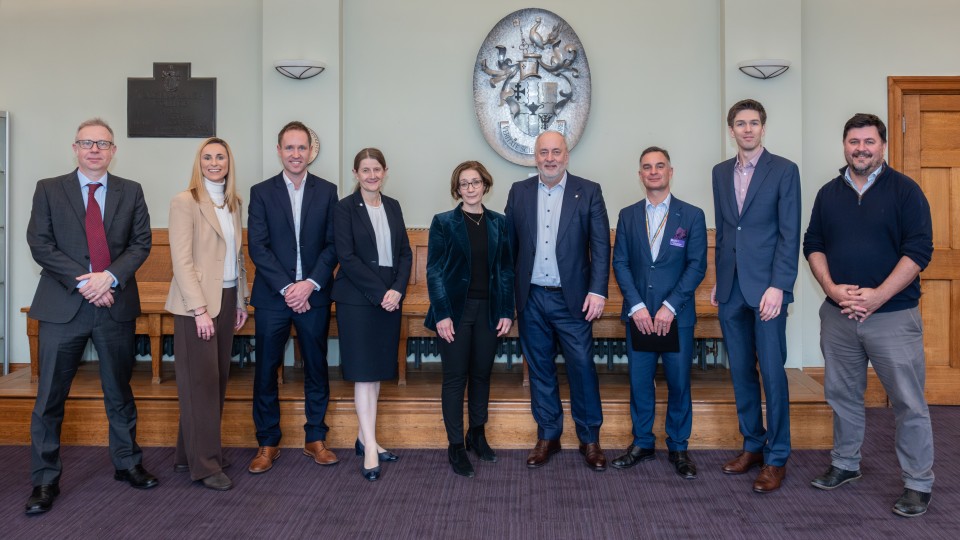
Today we have welcomed the Chief Executive of Universities UK (UUK), Vivienne Stern, to our East Midlands campus, alongside the Deputy Director of Policy, Charlie Ogilvie. This was an exciting opportunity for us to showcase Loughborough’s impact, strengths and distinctiveness.
As well as meeting with the senior team, Vivienne and Charlie spoke with our Executive Officer team from the Students’ Union. The UUK team had the opportunity to see the virtual reality headsets in our £5.8m DigiLabs facilities in action. They were also taken on a tour of several of our newly refurbished sports facilities that have attracted significant external funding from government and UK Sport, including the swimming pool and High Performance Athletics Centre. The University engages with Universities UK on a regular basis across a wide range of policy and regulatory matters, and this visit was a fantastic opportunity for us to showcase, in person, the outstanding experience that Loughborough offers to our students, staff and partners.
THE Awards win
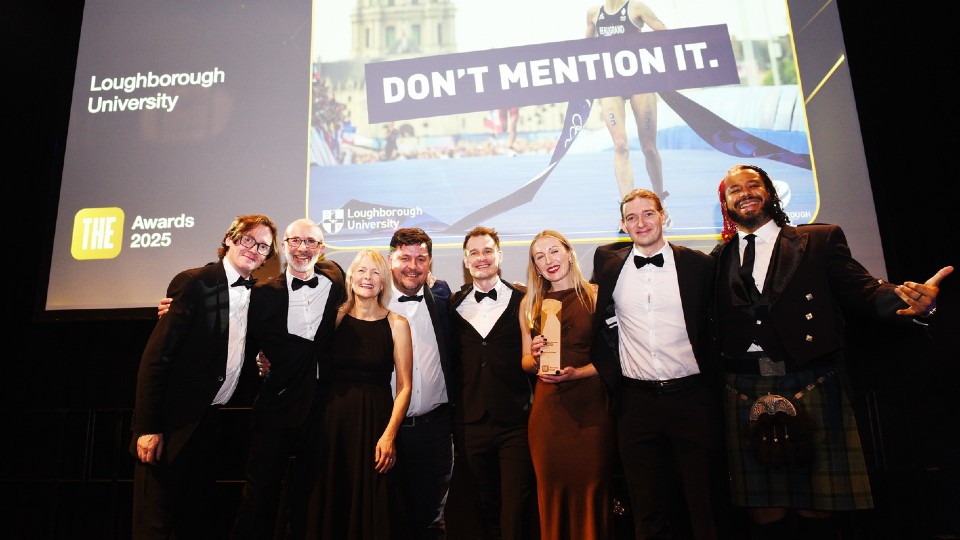
The University’s ‘Don’t Mention It’ campaign, which ran throughout the Paris 2024 Olympic and Paralympic Games, won the Outstanding Marketing/Communications Team award at this year’s Times Higher Education Awards.
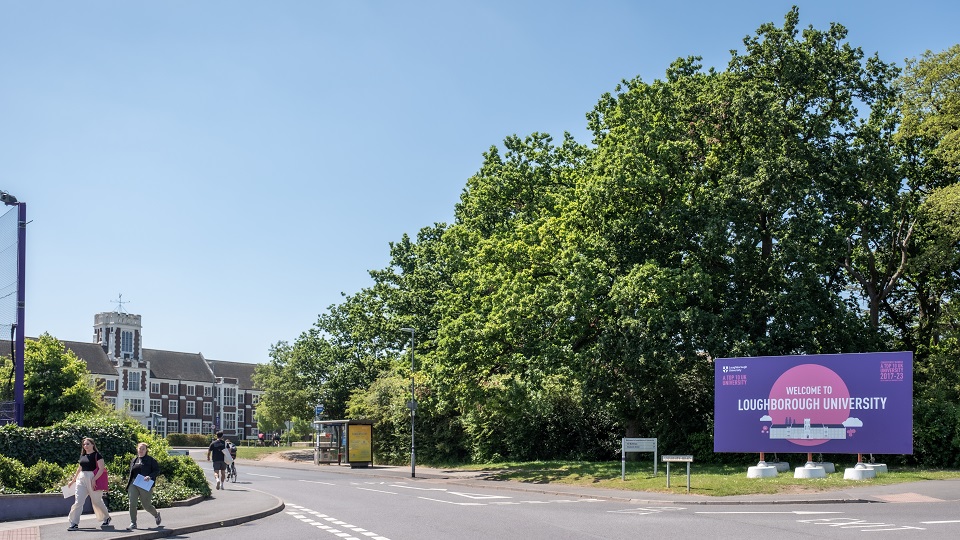
QS World University Rankings: Sustainability
The University’s ‘Don’t Mention It’ campaign, which ran throughout the Paris 2024 Olympic and Paralympic Games, won the Outstanding Marketing/Communications Team award at this year’s Times Higher Education Awards.

Staff Survey 2025
Don’t forget to have your say in the Staff Survey, which is open until 30 November. It’s your chance to let us know what you think we already do well, and the areas we need to focus on to make your experience of working here even better.


Vice-Chancellor's Communications
Opinions and comment from the Vice-Chancellor, Professor Nick Jennings