Introducing Dr Sara Shaker
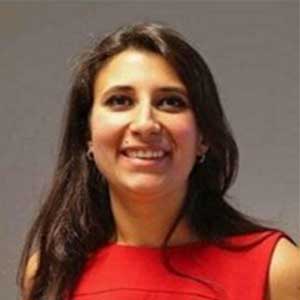
Having the opportunity to be a Residential Fellow at the Institute of Advanced Studies (IAS) at Loughborough University was one of the most enriching experiences of my academic journey. From the moment I arrived on campus, I was deeply humbled by the amazing welcome of the IAS team (Ksenia, Laura, Kieran, Lynda, Connor, Will) and the intellectually stimulating community that extends beyond disciplinary boundaries.
The IAS Residential Fellowship programme offers outstanding researchers from around the world a month-long research residency, providing not only time and space for scholarly work production but also a platform for connecting with fellow researchers and colleagues across different disciplines and research groups at Loughborough University.
During my stay at the IAS, I had the opportunity to meet with Dr. Vinícius Teixeira Pinto where we exchanged how sports become an arena for politics and activism. One of the most valuable aspects of the IAS is the interdisciplinary engagement it fosters. Through the IAS coffee mornings to corridor conversations, I was able to explore perspectives and insights outside my own field. This diversity opened new directions in my own research and broadened my ability to further explore new questions.
During the fellowship, I presented my work about “Drawing the Unseen: Graphic Reportage of Silencing during the Arab Spring”, where I explored the role of comic journalism in archiving the Arab Revolutions/Uprisings, with a particular focus on the graphic narratives of Arabic artists like Deena Moahmmed, Yazan Al Saadi, Hamid Suleiman, and Rawand Issa. I examined how these visual narratives function as counter-archives that challenge the official accounts circulated by Arab regimes. By introducing my work in an IAS research seminar, I was able to share key ideas with an engaged audience of faculty and students. This exercise not only sharpened my presentation skills but also yielded constructive feedback for further improvement. Additionally, in collaboration with the IAS, I had the opportunity to deliver a workshop to postgraduate students on job applications and postdoctoral opportunities, which fostered future collaboration and new avenues for joint research, including potential co-authored publications and grant applications, reflecting the interdisciplinary ethos of the IAS.
The IAS team was incredibly supportive throughout my residency. From navigating logistics to providing opportunities across departments, their administrative and academic support was incredible. The IAS residential fellowship provision, which includes campus accommodation, workspace, and collegial support, creates the ideal environment for immersive scholarly work.
The campus’s mix of green spaces, high-quality research facilities, and friendly spaces for dialogue made it the perfect space for focused academic work. It was only during my stay at the IAS, I was able to submit two scholarly works, one to the journal of Middle East Critique titled “Visual and Creative Resistance in Hamas’ Al-Fateh Comic Magazine: Beyond Militarism and Indoctrination ” that explores the comic magazine not only as an instrument of military indoctrination but as a hybrid medium of creative resistance. And another one to the international conference “Reimaging the New Middle East” at the Faculty of Economics and Political Science, Cairo University, which focused on how audio podcasts shape public opinion regarding the June 2025 Israeli attack on Iran, underlining their role as a media platform that plays an evident role in constructing political discourse.
As I reflect on my time as an IAS Residential Fellow, I am deeply grateful for the opportunity to connect with such a dynamic community and dedicated academics who invigorated my research agenda. I am truly thankful for such a rewarding academic experience, and I cannot wait to come back for another visit 🙂
Thank you so much for hosting a young, humbled academic from Egypt. I look forward to contributing to the growing legacy of international exchanges that the Institute of Advanced Studies champions.
Dr Sara Shaker

