Reflections on Midlands Innovation Open Research Week 2026
Report by Avsar Gurpinar
“Universities as Open Knowledge Research Organisations: Why and How” by Neil Jacobs (UK Reproducability Network)

The keynote focused on universities’ role in democratising knowledge by producing verifiable, reproducible research that can be scrutinised and reused. Jacobs linked his arguments to the work of the UK Reproducibility Network (UKRN), of which he leads the Open Research Programme, situating the talk within broader efforts to transform institutional research culture.
Defining open knowledge
A central part of the keynote was to define “open knowledge” and to ask what minimum degree of openness and transparency are required for work to count as open. This was framed by the familiar principle “as open as possible, as closed as necessary”, emphasising that openness is a default rather than an absolute, and that justified limits (for example, around privacy or sensitivity) remain compatible with open knowledge. The motto “Take no one’s word for it” underscores that what matters is not just the findings but also how the research was done, why particular choices were made, the evidence used, and the reasoning or judgment that links methods to conclusions.
UNESCO open science pillars
Jacobs also drew on the UNESCO Recommendation on Open Science to situate open knowledge within an international policy framework. UNESCO’s model identifies several interdependent pillars: open scientific knowledge (including publications and data), open science infrastructures, open engagement with societal actors, and open dialogue with other knowledge systems. The talk emphasised that open science should not be extractive; instead, it should involve engagement and dialogue with communities, including indigenous and local knowledge holders, in ways that recognise diverse epistemologies.
Data, infrastructure, and CARE
Open and FAIR research data were positioned as a key component of open knowledge, but Jacobs highlighted that data governance must also consider responsibility and ethics. This is where the CARE principles (Collective benefit, Authority to control, Responsibility, Ethics) were presented as an important counterpoint and complement to FAIR, particularly in relation to indigenous and community data. Infrastructures were presented not only as technical platforms but also as the information environment around research-repositories, metadata, identifiers, and systems that make research outputs findable, accessible and reusable over the long term.
Strategies for universities
In terms of practical strategies, the keynote outlined several ways universities can move towards becoming open knowledge organisations. These included cancelling closed, non-transparent databases where possible; supporting open infrastructures; and signing major declarations and agreements, such as the Barcelona Declaration on Open Research Information, DORA (San Francisco Declaration on Research Assessment), and CoARA (Coalition for Advancing Research Assessment), all of which promote open, responsible research assessment and open research information. Another strand was developing open research policies, prizes and champions, and embedding open and reflexive research practices explicitly in doctoral training and early career development.
Engagement, assessment and good practice
The talk emphasised that open knowledge also entails engagement with society through public involvement strategies, community engagement, and the sharing of good practices in open research across institutions. This includes open dialogue with other knowledge systems and communities, in line with UNESCO’s emphasis on open engagement with societal actors and diverse knowledge systems. Jacobs highlighted existing advice and guidance, including resources and case studies from institutions such as Oxford and Edinburgh, where open research and responsible research assessment are being integrated into policy, practice and support structures.
Jacobs referenced a book by Lucy Montgomery, which framed the “open knowledge institution” as a university model oriented to the common good, designed to tackle the collective action problems that currently undermine open research.
Open knowledge institutions and the common good
Montgomery drew on her work with Open Knowledge Institutions to argue that universities should serve as infrastructures for producing and sharing knowledge as a common resource, rather than as gatekeepers of scarce, prestige-based outputs. In this model, openness is not an optional add-on but central to the institution’s mission, so solving collective action problems around openness is part of the university’s core function in society.
Collective action problems in open research
The talk characterised open research as a classic collective action challenge, in which individual incentives do not automatically align with what is best for the research commons. A key example was incentive misalignment: researchers are often rewarded more for prestige signals (high-impact journals, rankings) than for transparent, reproducible, openly shared work, even when the latter is better for collective knowledge. Jacobs also highlighted the free-rider problem: many people and institutions benefit from open knowledge without contributing back. He argued that this is not inherently damaging in a commons model and is already present in existing open practices.
Wicked problems, risk, and trust
These issues were framed as “wicked problems” because they involve complex interdependencies, contested values, and shifting expectations. Risk and trust were central: researchers may fear reputational harm if openness exposes errors or invites criticism, and they may not trust institutions or assessment systems to value open practices fairly. Cultural lag compounds this, as norms and expectations around reward, prestige, and “proper” scholarly work tend to change slowly, even as policy rhetoric about openness advances.
Infrastructure, effort, and coordination gaps
Montgomery also emphasised infrastructure gaps and workload issues: open research requires time, tools, skills, and support (for example, for data curation, licensing, and documentation), and current systems often make openness difficult and time-consuming. He also highlighted coordination gaps between national and network-level initiatives (such as UKRN and other open research alliances) as another barrier, as fragmented efforts can lead to duplication, confusion, and uneven support for researchers.
Suggested solutions and directions
As possible responses, the talk highlighted implementing agreements such as CoARA and DORA to realign incentives and move away from prestige-driven, metrics-heavy assessment towards responsible evaluation that recognises transparent and open practices. Jacobs argued that universities should avoid prioritising prestige over transparency and instead develop policies, criteria, and narratives that explicitly reward openness as part of academic excellence. Strengthening infrastructure, resourcing support for open practices, and actively encouraging and recognising researchers who engage in open research were discussed as practical ways for institutions to reduce risks, build trust, and narrow the gap between open rhetoric and everyday practice.
“What even is open research?” by Jodie Heap (Keele University)
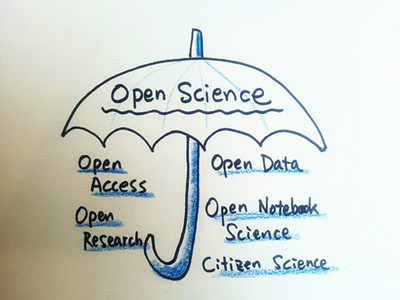
Jodie Heap, Scholarly Communications and Research Support Librarian at Keele University, led a session titled “What even is open research?!” that provided an accessible introduction to open research and its relationship to funding, assessment and scholarly communication. The session set out to clarify how open research extends beyond open access publishing, tracing how openness now spans the full research lifecycle and asking participants to consider what is already established, what is still emerging, and where uncertainties and tensions remain.
Heap distinguished between related but non-identical concepts: open access, open data, open research, and open science, emphasising that open research is best understood as a broad umbrella term for practices that make research processes and outputs more transparent, accessible, and reusable. She proposed three main pillars of open research: transparency in how research is conducted, accessibility of outputs and materials, and reusability of data, methods, and other products so others can meaningfully build on them.
The session discussed the range of materials that can fall under open research, including publications, datasets, methods, software, and even elements of peer review, with transparency increasingly seen as part of rigorous scholarly practice. Heap provided a brief historical overview in which the 2000s were dominated by debates and policy developments on open-access publishing, while the 2010s saw growing attention to open data and the formalisation of the FAIR data principles (findable, accessible, interoperable, reusable).
Building on this history, she noted that the 2020s have seen a broadening towards “open research” or “open science” as integrative frameworks that bring together open access, FAIR data, persistent identifiers (such as ORCID iDs and DOIs), and transparent methods and reporting into a more holistic approach to research culture. Within this framing, reproducibility, research integrity, public trust and value for money were highlighted as key rationales: open practices help make findings verifiable, enable others to scrutinise and reuse work, support global collaboration, and demonstrate the public benefit of funded research.
Heap also acknowledged that openness is not absolute: there will always be sensitive or restricted data for which full openness is neither possible nor desirable. Multiple actors: funders, institutions, publishers, infrastructures, and individual researchers need to work together to navigate these boundaries responsibly. Through short activities and group discussion, participants were invited to reflect on where their practices already align with open research principles, where they encounter barriers or ambiguities, and how the evolving ecosystem of policies, infrastructures and norms might shape what open research could become in practice.
“Learnings from the inaugural University of Warwick Open Research Awards” by Josh Caldicott, Gabriel Clarke and Yvonne Budden (University of Warwick)

The session by Josh Caldicott, Gabriel Clarke and Yvonne Budden from the University of Warwick described the launch of the university’s first Open Research Awards in 2025, created to recognise and celebrate projects and practices that embody open, transparent and collaborative research. The awards were presented at the inaugural Warwick Open Research Symposium to highlight strong open research practice across a wide range of disciplines. The talk also explained how cross-institutional collaboration within the Open Research Group helped secure funding, build institutional support and develop the awards as a sustainable initiative.
The panellists framed open research around several interconnected principles, including openness, accessibility, reusability, collaboration, inclusivity, knowledge exchange, impact, and innovation. A key message was that open research is broader than open access alone: it also encompasses how research is designed, documented, shared, and reused. The awards, therefore, recognised a diverse set of outputs and methods, rather than limiting recognition to conventional publications.
One of the most striking examples was a video protocol. Because it was openly shared and easy to access, other researchers could replicate the process more easily, and the protocol itself became citable. Other recognised formats included websites, zines and podcasts, showing that open research can take many forms and that valuable research communication does not always follow traditional academic publication models. The talk ultimately positioned the awards as both a recognition mechanism and a means of broadening understanding of what constitutes good open research practice.
“Introduction to the Open Book Collective” by Caroline Ball and Helene Murphy (Open Book Collective)

Caroline Ball and Helene Murphy introduced the Open Book Collective as a community-governed, non-profit initiative that enables libraries to collectively support open-access book publishers and the infrastructure that sustains them. The session presented it as an alternative to book-processing charges, grant-funded routes, and institutionally subsidised publishing, with a strong emphasis on shared investment, bibliodiversity, resilience, and long-term sustainability.
The talk positioned books as particularly important to open research in the humanities and social sciences, where monographs and edited collections remain central scholarly forms. It also highlighted why existing funding and policy models often struggle to support books equitably, and why collective approaches are being explored as a more practical and fairer solution.
How the model works
The Open Book Collective was described as a UK-registered, non-profit intermediary organisation with no commercial interest. It is not a publisher, a content bundle, a BPC (Book Processing Charges) scheme, a vendor, or a transformative agreement, and it deliberately avoids a one-size-fits-all model. Instead, it serves as a community-facing mechanism through which libraries can support publishers and infrastructure providers in a coordinated way.
A key part of the session was an explanation of how different funding routes compare. Publishing a book can cost roughly £10,000 or more, and the main routes discussed were author- or institution-paid BPCs, external grants such as AHRC or Wellcome, institutional subsidies, and collective models involving libraries and the Open Book Collective. The panel suggested that the collective model is particularly attractive because it spreads responsibility and makes support for open books more sustainable.
Publishing landscape
The session also mapped the wider ecosystem around open-access books. It highlighted Diamond OA and COPIM (Community-led Open Publication Infrastructures for Monographs) as key reference points in developing non-commercial open publishing infrastructure. There was also discussion of communication among libraries, the Open Book Collective and publishers, showing that the model depends on active coordination rather than a simple transaction.
Different kinds of presses were identified, including university presses such as Edizioni Ca’Foscari and LSE Press, scholar-led presses such as Mattering Press and punctum books, and independent presses and service providers, including those producing MARC (MAchine-Readable Cataloging) records. This variety illustrated that open book publishing is not a single category but a diverse field with different needs, capacities and missions.
Significance for open research
The session presented the Open Book Collective as a timely and potentially defining development for future publishing standards. Its importance lies in how it addresses longstanding problems of affordability, discoverability, governance, and global knowledge equity. By focusing on collective funding and shared infrastructure, it offers a model that aligns with the broader open research agenda without reducing openness to article-based publishing. This talk can serve as an example of how open research extends beyond data and articles into the economics and governance of scholarly communication. It also shows that open access publishing is increasingly being reimagined not only as a technical or policy issue but also as a collective, institutional and infrastructural one.
“Institutional experiences of rights retention policies” by Mike Dainton (University of Birmingham), Jim Grange (Keele University), Lucy Veasey (University of Nottingham), Nicola Dowson (Open University), and Gwen Kent (Open University)

This panel focused on how universities are using rights retention to make research outputs openly available while remaining compliant with funder and institutional open access requirements. The speakers explained that current regulations have mainly centred on journal articles and conference proceedings with ISSNs, and that rights retention is a way to ensure wider dissemination by allowing the author to retain the right to share an openly accessible version of the work.
A key element was the rights retention statement, which typically declares that, for the purposes of open access, the author has applied a Creative Commons Attribution licence, usually CC BY. The panel described this as a gateway to open research because it enables immediate or near-immediate access via repositories and services such as institutional databases, Zenodo, arXiv and SSOAR (Social Science Open Access Repository).
Gold and green access
The discussion also clarified the difference between gold and green open access. Gold OA means the final published version is openly available on the publisher’s platform, often with a fee, while green OA involves self-archiving a manuscript version in a repository, sometimes subject to an embargo. The panel suggested that rights retention strengthens the green route by preserving the author’s ability to deposit and share the accepted manuscript under a CC BY licence.
Why it matters
The overall aim was framed as the broad dissemination of knowledge, alongside a cultural shift towards openness in research practice. The speakers linked rights retention to broader ambitions for open research, particularly the idea that authors and institutions should retain sufficient rights to share publicly funded research without unnecessary barriers. In that sense, rights retention was presented not only as a compliance mechanism but also as part of a broader move to normalise openness across the research lifecycle.
“Citizen Science panel” by Janice Ansine, Helene Murphy (Open University), Rachael Leman, Paulina Pawlikowska, Jane Bonnell, Hannah Jenkins, and Katie Woodhouse-Skinner (Nottingham Trent University)

This panel defined citizen science as research involving public participation in collecting, contributing to, or helping to interpret data, and linked that participation to collaboration, innovation and impact. It also introduced the ten principles of citizen science and emphasised that volunteers contribute time, attention and local knowledge in ways that can materially strengthen research.
The session used several examples to illustrate how citizen science works in practice. iSpotNature was presented as a biodiversity platform, while the leopard-monitoring case used photographs taken by safari visitors to identify animal locations, behaviours, and conditions in the wild.
Another striking example was “Spot a Hog,” which uses privately owned garden camera traps and citizen-contributed observations to monitor hedgehog populations. The panel also noted that citizen science can support zoo species planning, demonstrating that the approach is useful not only for conservation but also for broader wildlife management and planning.
Conclusion
Ultimately, the Open Research Week was an informative and comprehensive event that addressed issues ranging from open science to open publishing, and from intellectual property to rights retention. All the sessions were recorded and shared on the University of Leicester’s Research Repository.


Open Research
Copyright, Open Access and all things Open Research