Vice-Chancellor’s Speech, Council Senate Dinner 2026
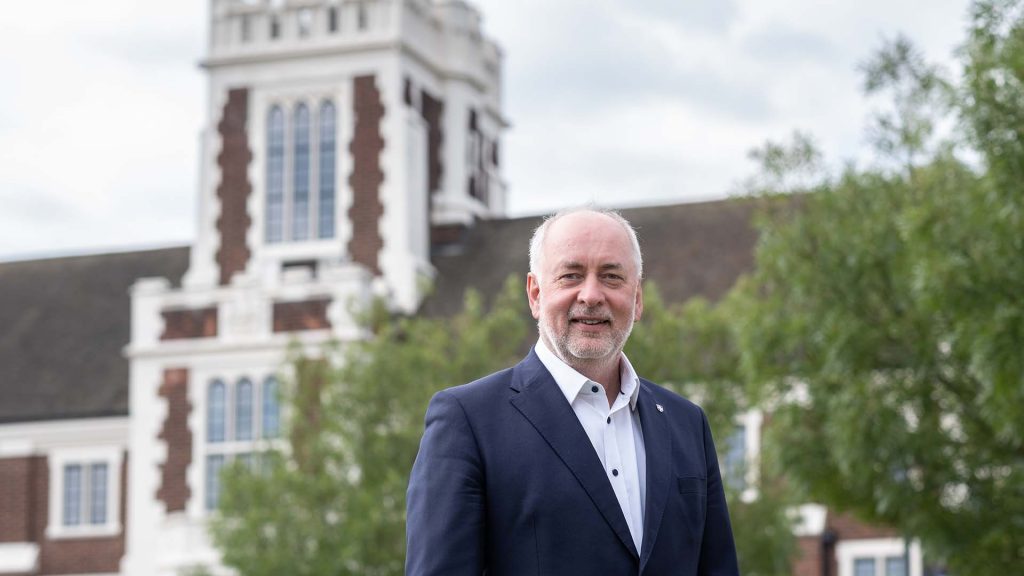
This is now my fifth Senate and Council dinner, and every year I feel a sense of enormous pride in talking about our achievements and the amazing colleagues who make them happen.
Once again, I’m pleased to say we have made good progress towards the aims of our ‘Creating Better Futures. Together’ strategy.
With significant shifts in the UK higher education landscape, this year we undertook a comprehensive review of our strategy and realigned our trajectory to focus on three priority areas.
Specifically, over the coming years:
- We will grow our research power in the run up to the Research Excellence Framework submission, to put us in the best possible place to deliver research with impact
- We will enhance the Loughborough Student Experience and maintain our leading UK ranking, to underpin our student recruitment. And
- We will capitalise on our prowess in sport to raise our global profile and give us a competitive edge
The year got off to an excellent start.
In the autumn we were awarded one of the most prestigious honours in the sector – a Queen Elizabeth Prize for Higher Education. Loughborough now ranks among the most highly acclaimed institutions, with eight awards in total – only Oxford has more.
The latest Prize (our first for 12 years) recognises our outstanding contributions to Para and disability sport research and development. Over the last two decades, Professor Vicky Tolfrey and her team have been pivotal in driving Britain’s success, delivering performance innovations that have helped ParalympicsGB secure a top two world ranking at three consecutive Paralympic Games. With colleagues in Loughborough Sport, they have created a world-class ecosystem that is unique in higher education.
Groundbreaking sports-related research such as this also underpins our consistently excellent performance in the QS global subject rankings. This year we were crowned the world’s best university for sports-related subjects for the tenth year in a row. Being the best in the world in a given academic subject is a rare achievement. Being at the top for a decade is truly special!
Other subject areas also performed well. We are in the top 50 in the world for our work in Information Management, Physiology, and Art and Design. And we are in the top 100 in Communication and Media Studies, Geography, Architecture and several of our engineering areas from automotive to mechanical.
We also made significant progress towards our strategic aim to break into the world’s top 200 universities. In the QS World Rankings, we climbed 22 places to 203rd. This is our highest ever ranking! And reflects real progress in our international profile, our standing with employers, and our research impact.
As a university, we have always excelled in research that informs debate and brings about meaningful change.
- The Digital Decarbonisation team in the Business School is working to embed best practice in governments and businesses to reduce the carbon footprint associated with AI and data management.
- Our experts are leading the DECODE partnership with the NHS to enhance the coordination of care for people with intellectual disabilities and multiple long-term conditions
- And our Centre for Renewable Energy Systems Technology has deployed the world’s first, full-scale, battery-electrolyser test unit — producing and using green hydrogen for clean cooking at hospitals in Malawi.
Our research makes a real difference: on our doorstep, across the country and around the world.
Ensuring we are well placed to address key societal challenges is a key aim of our recently launched Flagship Research Institutes. The six Institutes represent areas of genuine research excellence and impact: Clean Energy; Culture and Society; Digital Futures; Healthy Living; Responsible Manufacturing; and Women in Sport.
Through these Institutes we will strengthen collaboration across disciplines, deepen engagement with external partners, and be more focused in our approach to attracting large-scale research funding.
As well as shaping our thinking, research is also the foundation for pioneering innovation and we’re at the heart of the country’s drive to turn great ideas into thriving businesses.
This year we led the Midlands’ campaign to encourage investment in university research. The campaign featured prominently at a global investment summit during London Tech Week. The summit attracted around 2,000 delegates representing the government, civic leaders, universities and investors to showcase the UK’s world-leading research strengths, innovation ecosystems and investment‑ready opportunities.
We are also part of a newly-announced digital gateway to the region’s £31billion innovation economy. The Midlands Ecosystem Platform connects startups, universities, industries and investors. More than 600 Loughborough University-linked companies are listed on the site. These include spin-outs such as TransHumanity Ltd (which analyses data to reduce traffic congestion and improve road safety) and Zayndu (that specialises in seed priming technology to enhance crop yields without chemicals).
Nurturing talent and ambition are the foundation for successful innovation. This year we became the first Midlands university to join the prestigious WE Innovate network, led by Imperial College London. The network supports women-led startups across the UK, transforming early-stage ideas into viable, investor-ready ventures. Twenty female founders enrolled on our inaugural programme and we’ve now selected our first winner, whose business uses elite sport and music to develop performance-driven cultures in organisations.
Such initiatives are an important part of our research ambitions, as is our new Research Academy. The Academy will help drive the transformative cultural change needed to harness our collective power and position Loughborough as a global research powerhouse. Over the next five years, the Academy will support and develop more than 4,000 staff, doctoral researchers and students.
The establishment of the Academy was made possible thanks to the generous philanthropic donation – the largest in our history – from Loughborough alum Chris Gill. This is the second transformative donation that Chris has made to the University. In 2021, he generously supported the development of the Student Success Academy to support students from underrepresented backgrounds. Since its launch, the Academy has had nearly 30,000 interactions with students as they move through their University journey and into graduate life.
Philanthropic gifts and donations from alumni, supporters and friends enable so much of what we do. This year, on our first-ever Giving Day, staff and alumni donated more than £90,000 to help support a range of initiatives, including Opportunity Scholarships for students from lower income backgrounds or areas of low participation in higher education.
Ensuring every student can reach their potential and be supported to be their best, is the cornerstone of our education and student experience offer. Our success stems from continuous innovation and our DigiLabs are a perfect example of this.
The next half century will be shaped by technologies such as AI, VR and 3D data capture. With DigiLabs Central, the three labs will keep the University at the forefront of teaching and learning and ensure our graduates are future fit for the world of work with the knowledge and experience required for the highly skilled roles of tomorrow.
When taken together — our excellent student experience, our pedigree in sport, and our impactful research — ensure we’re able to offer something truly distinctive. In an uncertain world we must take every opportunity to capitalise on our Loughboroughness.
This distinctiveness is especially important in today’s higher education sector. All universities are facing a level of pressure we have not experienced before. And we are not immune. This year we’ve had to take difficult decisions to deliver financial savings that will stand us in good stead for the future. Alongside spending controls, vacancy management and changes to the ways we work, we have removed a number of Professional Services roles and made changes to others to bring key teams together. I recognise this has been difficult for all those involved and I am grateful for the thoughtful and collaborative way in which this has been handled.
In terms of being future fit, it’s important that we continue to fly high in national league tables. To this end, I was delighted to see that we were ranked 8th in the 2027 Complete University Guide. We have now entered our second decade as one of the UK’s top 10 universities — an amazing achievement of which everybody in this room has played a part.
But we cannot be complacent. We cannot stand still. We have plans for growth and know the importance of investing in our student experience. That’s why we’re building a new hall of residence on campus and have added nearby Longcliffe House to our suite of postgraduate accommodation. It’s why we’re transforming the buildings, performance spaces and outdoor areas associated with our art and design education.
Our students regularly tell us that where they live and the facilities on their doorstep are important parts of their university experience. At Loughborough, hall life fosters a real sense of community and belonging, helping build friendships and global networks that last through our students’ Loughborough years and beyond. That’s why it’s so important that we continue to invest in such projects.
Building connections is so important. Last month, I was part of the UK Government’s largest ever trade delegation to the US to help boost Britain’s transatlantic ties. The event was part of the UK Government’s Greater Together mission to highlight the strengths of UK higher education, research and development.
We visited a number of universities to strengthen the pipeline of US student athletes coming to Loughborough. We also explored ways to unlock and accelerate UK-US innovation and investment partnerships grounded in sport.
Over the next few years, the US will host global sporting events, such as the 2028 Olympic and Paralympic Games, which will be the perfect stepping stones for collaboration. Thankfully, we’re already on the right track. As a founding partner with the University of Oregon in the Global Sport University Network, we’re using our expertise in sport to solve timely, complex problems. And we’re supporting the US performance sport infrastructure. In the run-up to the 2025 Women’s Rugby World Cup last autumn, for example, we hosted the USA team training camp. However, despite benefitting from our first-class preparation environment, the US team was no match for the England Red Roses, who ultimately stormed to victory to lift the World Cup trophy. I’m proud to say that the squad included seven Loughborough-linked players, including University student Sadia Kabeya, who was named player-of-the-match in the final.
Later this month we’ll welcome another Team England to campus ahead of the 2026 Commonwealth Games in Glasgow. As the official University Partner of Team England, we’ll host a number of their immersion camps ahead of the Games. We’ll also host ‘Kitting Out’, where they will be provided with all their apparel including their podium kit featuring our logo.
This value-in-kind partnership with Team England reflects not only our strategic ambition to enhance our excellence in sport, but also underlines the quality of the sporting ecosystem we offer to athletes as they head onto the world stage.
All these achievements and the global reputation we enjoy are due to the hard work and contributions of our people – whether they’re lecturing in our classes or landscaping our grounds. If we are to continue succeeding in our endeavours, we need to attract and retain the very best. Loughborough must be a great place to work and develop. A place where everyone feels welcome, empowered and valued.
I was therefore delighted to see us placed 26th in the 2026 Financial Times ranking of the UK’s best employers. And I very much hope that our first ever People and Culture strategy will help cement our position as an employer of choice. It’s already guiding how we shape the experience of our staff and approach our development, wellbeing and leadership. An important manifestation of this is our Growth Learning Opportunity and Wellbeing – or GLOW – framework. Inspired by the research of our academics in coaching and building high-performing teams, we’ve completely changed our approach to personal and career development. I believe this will have a profound effect on the way we work and the quality of our employee experience.
2026 marks the 60th anniversary since Loughborough University was granted its Royal Charter. The world has changed considerably over the last six decades and so have we. In 1966, we had 1,800 students and a handful of academic departments. And while iconic buildings such as Towers, Hazlerigg and Rutland were proudly in place, others, such as the Pilkington Library and the Students’ Union, were yet to be imagined.
But throughout our history, we’ve had a strong sense of purpose and been aware of the strengths that made us stand out. The years since 1966 are punctuated with myriad achievements, successes and developments. This evening, I’ve only had time to mention a few from the last 12 months. But I hope tonight has made you feel proud of everything we’ve achieved and, perhaps most importantly of all, I hope it has inspired you to help lay the foundations for the next 60 years.


Vice-Chancellor's Communications
Opinions and comment from the Vice-Chancellor, Professor Nick Jennings