I didn’t know I was a sandwich!
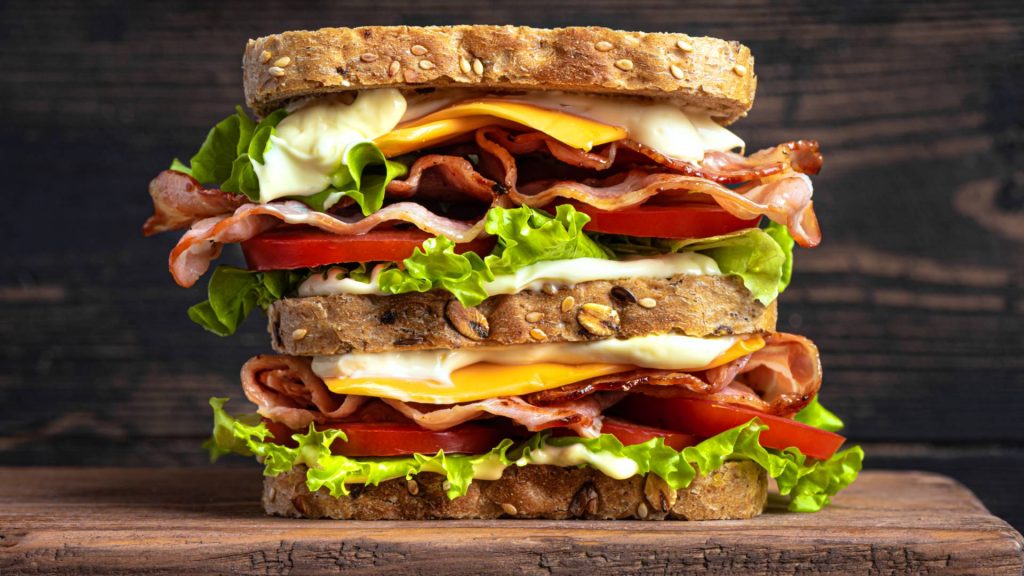
Image courtesy of Getty Images
As the demands of caring span multiple generations, Dr Rebecca Higginson, Reader in Metallurgy and Materials Engineering and Associate Dean for Equity, Diversity and Inclusion, reflects on the growing pressures facing ‘sandwich carers’ balancing the needs of children and ageing parents.
Sandwich generation is not a term I’d come across until today. Apparently, it’s the group of people usually between 40 and 60 years old who are “sandwiched” between two dependent generations; their children and elderly parents. It can lead to considerable stress on the individual who is trying to balance multiple calls on their time and finances. As soon as I read the definition, I realised I fitted it perfectly. Like many people in midlife, I spend time supporting family members, often without really thinking of myself as a carer.
A quick internet search led me to discover that there is more than one type of sandwich carer. Not only am I a sandwich, but I am a specific type of sandwich! There are three different sandwich situations. The first is a “traditional sandwich”, which is where someone is caring for their elderly parents whilst also raising children, or who has children or young adults who are still dependent on them. Then there is the club sandwich, which is somebody who has the “traditional sandwich” responsibilities and is also looking after grandchildren, adding a third layer to the sandwich. The final sandwich is referred to as an open sandwich and describes individuals caring for an elderly parent, but who do not have children for whom they are responsible. While this terminology may sound light-hearted, the reality is much less amusing for many families.
Although often referred to as the “sandwich generation”¹, it is not a generation in the same sense as Generation X or the Baby Boomers. Instead, it describes a stage of life, making the term “sandwich carers” arguably more accurate. I remember both my mother and grandmother being at the sandwich age, caring for children, grandchildren and their elderly parents.
Research has shown that sandwich carers can suffer from burnout due to the increased pressure of trying to juggle all these responsibilities. Unfortunately, with the age profile of the UK population changing, longer life expectancies and women delaying having children, it will become increasingly likely that we reach a crunch point where parents of young children may also be looking after dependent elderly parents.
Although accurate data can be difficult to obtain because many people do not identify themselves as carers, the Office for National Statistics estimates that there were more than 1.4 million sandwich carers in the UK between 2021 and 2023. Women make up the majority of this group, accounting for 61% of sandwich carers, compared with 39% who are men2.
The data also suggest that caring has a tangible impact on wellbeing. Around 31% of sandwich carers reported symptoms consistent with anxiety or depression, compared with 24% of the wider population. Those providing 20 hours or more of care each week reported the poorest outcomes, with higher levels of financial difficulty, lower life satisfaction and poorer physical health.3,4
In an ever-faster-moving society, where it is already a struggle to balance work commitments and personal time, this may lead to an increase in burnout or people leaving employment to take up care responsibilities full time, which can cause further isolation. While many sandwich carers manage these competing demands successfully, the data highlights why it is important to seek support before reaching crisis point.
If you’ve recognised yourself in this description, what can you do?
- Identify yourself as a carer. Many people provide significant support to relatives without thinking of themselves in that role. Simply recognising the contribution you make can help you access appropriate support.
- Ask for help early. Family members, friends, community groups and local authorities may be able to share some of the burden. Waiting until you are exhausted often makes the situation harder.
- Talk to your employer. The University has a number of measures in place that can help. These include carers’ leave5 and flexible working6. The Employee Assistance Programme is also available to you and your immediate family, offering a wide range of support and advice.
- Protect your own wellbeing. It can feel selfish to make time for yourself when others depend on you, but regular exercise, social contact and personal interests are important safeguards against burnout.
- Know what support is available. External organisations such as Carers UK7 and Age UK8 provide information, advice and practical guidance for people balancing caring responsibilities.
Being a sandwich may not sound particularly glamorous, but as our population ages, more of us may find ourselves in this position. Recognising the challenges faced by sandwich carers, and ensuring they receive the support they need, will be increasingly important for families, employers and society. Perhaps, like me, the first step is simply recognising that many of us are already carers.
References
- The Sandwich Generation: Caring at Both Ends (accessed 09/07/2026)
- Sandwich carers, UK – Office for National Statistics (accessed 04/08/2026)
- Sandwich carers call for greater recognition and help – BBC News (accessed 04/08/2026)
- Carers at breaking point: The social care burden on women | Age UK (accessed 04/08/2026)
- Carer’s Leave | Human Resources | Loughborough University (accessed 04/08/2026)
- Flexible Working Policy | Human Resources | Loughborough University (accessed 04/08/2026)
- UK | Carers UK (accessed 05/08/2026)
- Age UK | Let’s change how we age (accessed 05/08/2026)


Health and Wellbeing
Wellbeing means being in a positive physical, social and mental state. Wellbeing is important to us as happy, healthy people who achieve harmony in their work / life mix are more creative, productive and help to create a great place to work.