OWN-EU launches in Romania: Rethinking the future of EU enlargement
By- Dr. Massimo D’Angelo (FHEA)
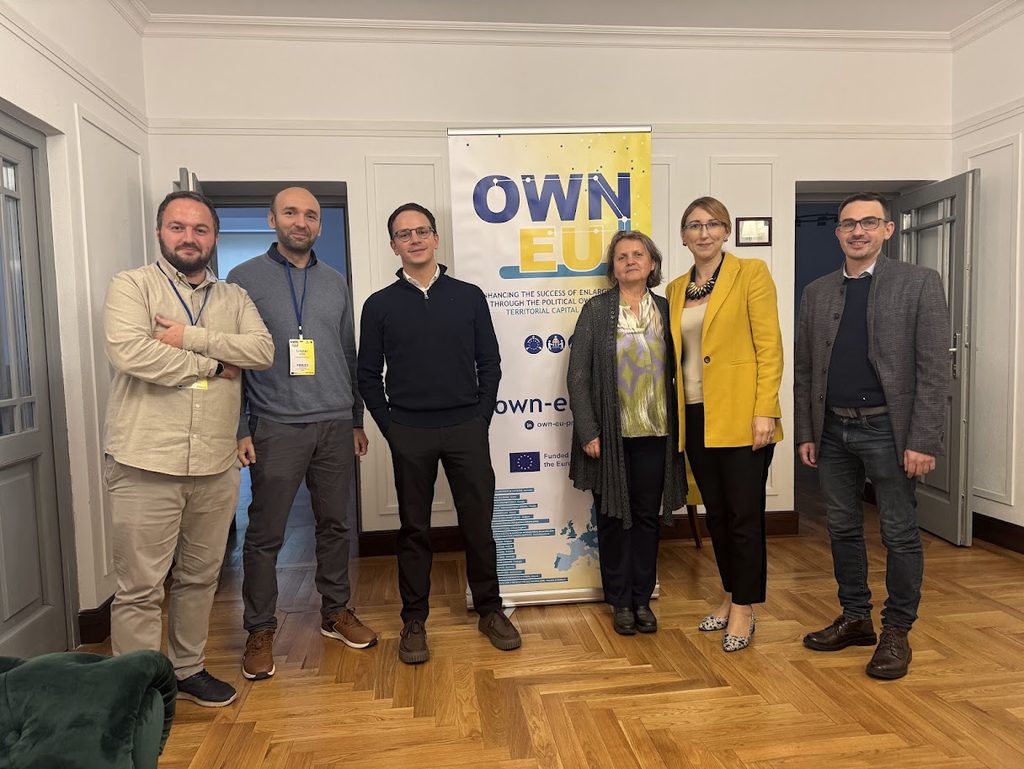
Loughborough University London’s IDIA joins a major European research project exploring how to make future EU enlargement more successful and sustainable.
On 16–17 October 2026, researchers from Loughborough University London’s IDIA travelled to Iași, Romania, to participate in the official launch of OWN-EU, a major new research project funded by the European Union’s Horizon Europe programme.
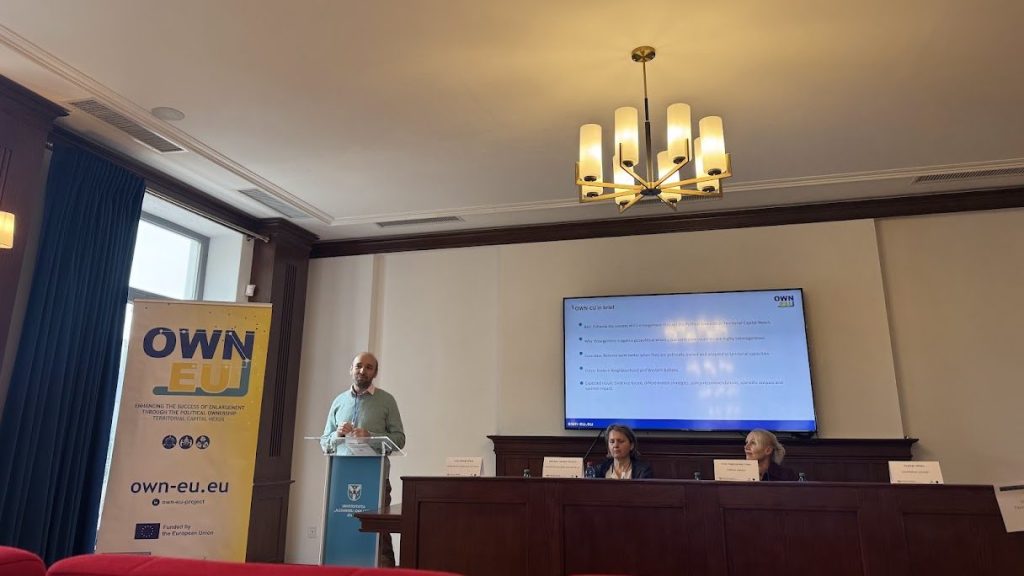
Hosted by the Alexandru Ioan Cuza University of Iași, the two-day event brought together academics, researchers, policymakers and civil society representatives to discuss one of the most important questions facing Europe today: what makes EU enlargement successful, and how can the EU improve the way it welcomes new members?
OWN-EU, which stands for Enhancing the Success of Enlargement through the Political Ownership–Territorial Capital Nexus, is a three-year project running from September 2026 to August 2029. It brings together 18 partner organisations, including universities, research institutes, think tanks and civil society organisations from across Europe and its neighbouring countries.
The project has received approximately €3.47 million in EU funding through Horizon Europe, under Cluster 2, Culture, Creativity and Inclusive Society, within the Democracy research area.
Why does EU enlargement matter today?
EU enlargement has returned to the centre of European political debate. With Ukraine and Moldova progressing through accession negotiations and several Western Balkan countries pursuing membership, the prospect of welcoming new members has become an increasingly important part of Europe’s political future.
Indeed, just days before the OWN-EU launch, the European Union announced further progress in accession negotiations with Ukraine, Moldova, Montenegro and Albania.
However, enlargement is about much more than extending the EU’s borders. Joining the Union involves substantial changes to national laws, public institutions, economies and democratic systems. And while previous enlargement rounds have brought significant opportunities, their benefits have not always been equally distributed across countries and regions.
This is precisely where OWN-EU comes in.
The project explores two closely connected questions. First, to what extent do governments, institutions and citizens genuinely support and take responsibility for the reforms required to join the EU? Researchers call this political ownership. Second, how do the economic resources, infrastructure, institutions and skills available in different countries and regions influence their ability to implement these reforms? This is known as territorial capital.
By examining how these factors interact, OWN-EU aims to understand why European integration works better in some places than in others, and how future enlargement policies can better respond to the needs of individual countries and communities.
A leading role for IDIA
Although the project is coordinated by the University of Iași, under the leadership of Professor Gabriela Carmen Pascariu, IDIA plays a central role in its scientific development and implementation.
Dr Cristian Nitoiu, Senior Lecturer at Loughborough University London, serves as the Scientific Director of the entire OWN-EU project, helping to guide its research direction and ensure coherence across the different activities undertaken by the consortium.
Dr Massimo D’Angelo co-leads Work Package 4 (WP4), alongside the University of Warsaw. This part of the project will examine previous rounds of EU enlargement, particularly those between 2004 and 2013, to identify lessons that can inform future accession processes.
The research will combine a three-layered literature review with the analysis of existing evidence, including European Commission reports, Eurobarometer public opinion surveys and other sources documenting political, economic and institutional developments across Europe.
One of its questions is how we should measure the success of EU enlargement. Is an accession successful simply because a country completes negotiations, adopts European legislation and joins the Union? Or should success also be assessed through what happens afterwards, including the quality of democratic institutions, continued compliance with EU rules and the long-term benefits experienced by citizens and regions?
These questions will guide the team’s research, leading to reports, an academic publication and a policy brief offering recommendations for future enlargement.
Two other IDIA researchers, Dr Nicola Chelotti and Arbnor Bajraliu, are also involved in the project, contributing to Loughborough’s wider research activities.
From Iași to the next three years
The kick-off meeting in Iași offered the first opportunity for the international consortium to come together, introduce its research teams and agree on the strategy that will guide its work over the next three years.
Discussions focused on how to combine different research approaches, identify useful sources of evidence and ensure that the project’s findings can reach audiences beyond academia.
The next stages will include reviewing existing research on EU enlargement, collecting and analysing data from previous accession rounds, and developing new ways to understand the relationship between political commitment and regional development.
The consortium will also organise workshops and participatory activities in several European countries, including initiatives designed to bring researchers, public authorities and local communities into direct dialogue. These activities will help ensure that the project considers not only the perspectives of policymakers but also those of the citizens most directly affected by European integration.
Ultimately, OWN-EU seeks to produce practical recommendations and tools that can help make future enlargement policies more effective, inclusive and sustainable.
For IDIA, participation in OWN-EU represents an important opportunity to contribute to a major international research collaboration at a time when the future of EU enlargement is once again a central question for Europe.
As the European Union considers its next enlargement, understanding not only how countries can join, but also how they can succeed as members, will be more important than ever.
For more information about the project, visit OWN-EU or the European Commission’s project page.
OWN-EU has received funding from the European Union’s Horizon Europe research and innovation programme under Grant Agreement No. 101290576.


Loughborough University London
Blogging everything that’s happening at Loughborough University London